-
When the USSR fell, Kazakhstan inherited borders but no symbols. Rather than keep the capital received, he decreed another on a frozen plain and topped it with a palace. A story of a sovereignty built from scratch - and of a monument to permanence planted in a city that will change its name twice.
We often look at the Akorda with a smirk: a blue and gold dome standing in the middle of nowhere, the “Dubai of the steppe”, the architectural whim of a man who remained in power for thirty years. This is missing the point. This palace is not an ornament; it is a founding act. When the Soviet Union collapsed in December 1991, the fifteen republics that emerged inherited borders, administrations, factories - but not the symbols of a sovereignty that they had never exercised alone. Kazakhstan, for its part, chose the most radical response: it was not content to keep the capital received. He invented one, on an empty steppe, and placed a palace in the center to tell the world that a state had been born.
Investigation into a decreed capital, and the palace which serves as its keystone.
We must measure the audacity of the gesture. Building a palace is one thing; building the city that surrounds it, the axis that frames it, the country that justifies it, is another. The Akorda is not only the workplace of a president: it is the centerpiece of a national staging improvised over fifteen years on one of the most inhospitable plains on the continent. Where old nations inherit their palaces, Kazakhstan had to make its own - and with it, the idea that it had always existed.
When the empire collapses, everything has to be reinvented
Kazakh independence in 1991 was both a gift and a dizzying moment. The country is immense - larger than all of Western Europe - rich in oil, gas and uranium, but devoid of modern state tradition: its inhabitants were nomads before being Soviet citizens, and never, in the meantime, the subjects of a sovereign Kazakh state. But a State needs a face. He needs a flag, an anthem, a currency - and a seat of power that says who he is.
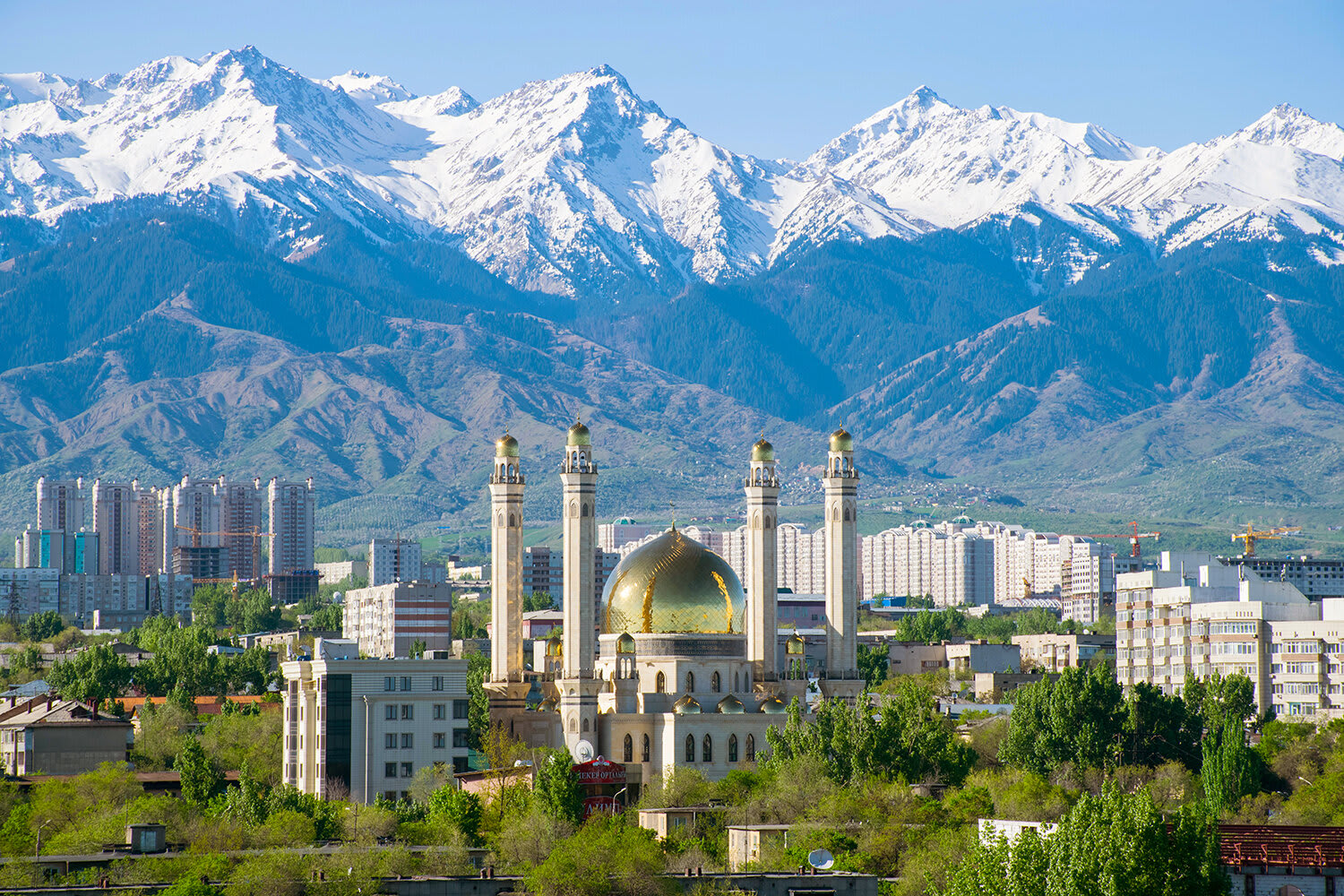
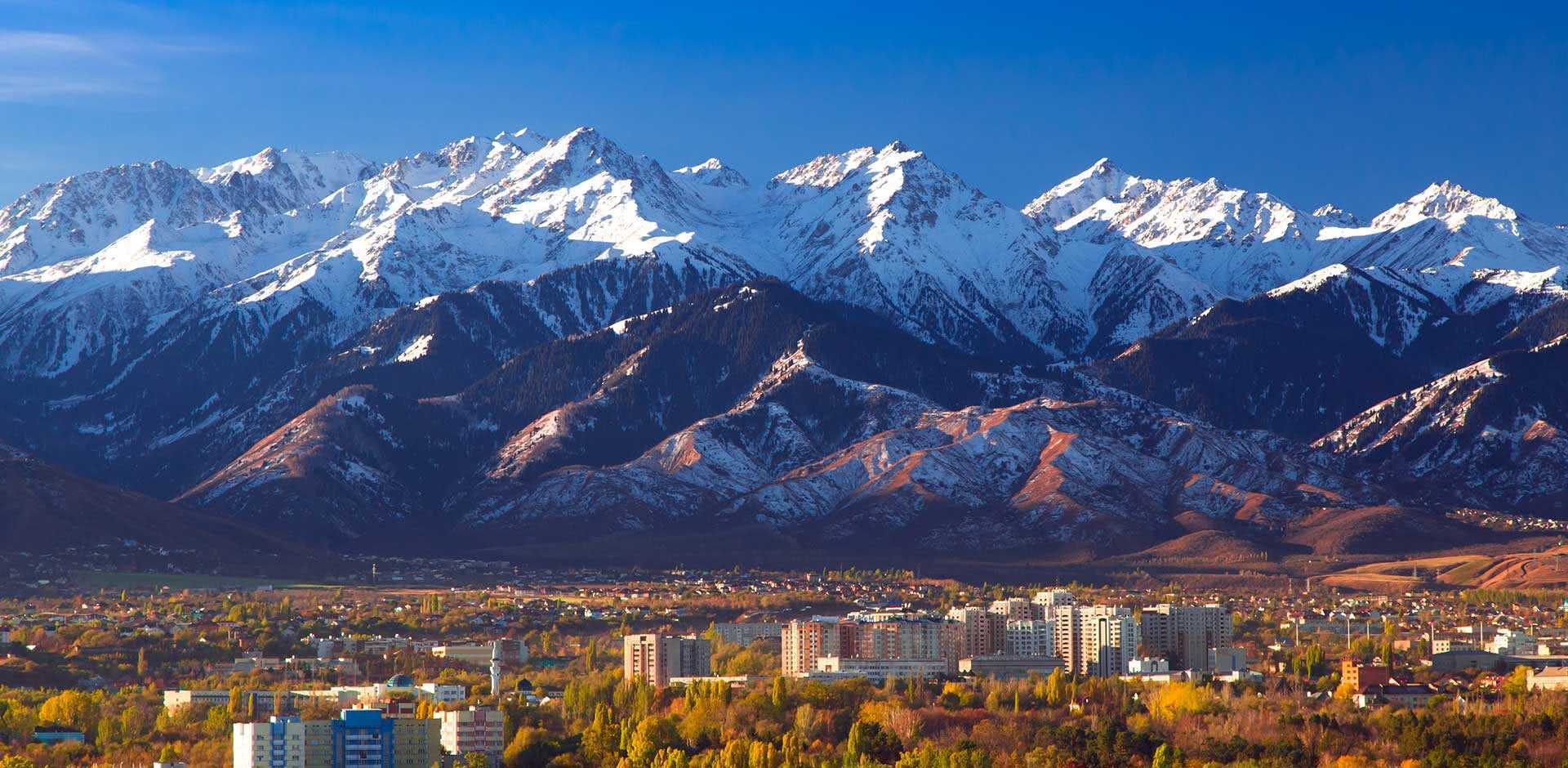
The inherited capital, Almaty, did not fulfill this role to the taste of the first president, Nursultan Nazarbayev. Beautiful, green, backed by the Alatau mountains, it was also enclosed by them: stuck in a basin, it no longer had space to grow. It was in a seismic zone, within range of a devastating earthquake. And above all, it was located in the south-east, at the edge of the borders, far from the center of the country.
Why leave Almaty?
The idea of moving the capital germinated in the first months of independence. Formulated before Parliament on July 6, 1994, it was initially greeted with smiles: many saw it as a joke, as the idea of swapping the gentleness of Almaty for a snowy town in the north seemed absurd. Nazarbayev held his ground. Thirty-two criteria were weighed - climate, seismicity, infrastructure, labor. Several towns were pushed aside; it was Akmola, in the geographical center of the steppe, a thousand kilometers from Almaty and eight hundred from the northern border, which won.
To the official reasons was added one, more rarely said but widely analyzed: the north of the country, along the longest continuous land border in the world with Russia, was mainly populated by Russian speakers. Moving the capital to these lands, attracting migration from the south, meant anchoring the Kazakh state in a region where its demographic influence remained fragile. The capital was not just an urban project: it was an operation of sovereignty over its own territory.
A capital decreed on a frozen steppe
The chosen location was not obvious. The city, which was successively called Akmolinsk then, during the Soviet era, Tselinograd - the “city of virgin lands” - had some 270,000 inhabitants on a treeless plain, swept by the winds, one of the coldest capitals on the planet, caught in winter by ferocious blizzards. It was there, on the left bank of the Ishim, opposite the old Soviet city, that the new city was to be built.
The transfer was made official at the end of 1997; on November 8, the flag, emblem and presidential standard arrived in the city. In 1998, it was renamed Astana - literally “the capital” in Kazakh. The name said it all: it was not a city that became a capital, it was the Capital made a city. To legitimize a gesture that history would judge, Nazarbayev invoked great precedents: Peter the Great wresting the Russian capital from Moscow and planting it in the marshes of Saint Petersburg, Atatürk preferring Ankara to Istanbul. Like them, he planted a flag where there was almost nothing, betting that the will of one man would be enough to create a center.
Architecture as an act of sovereignty
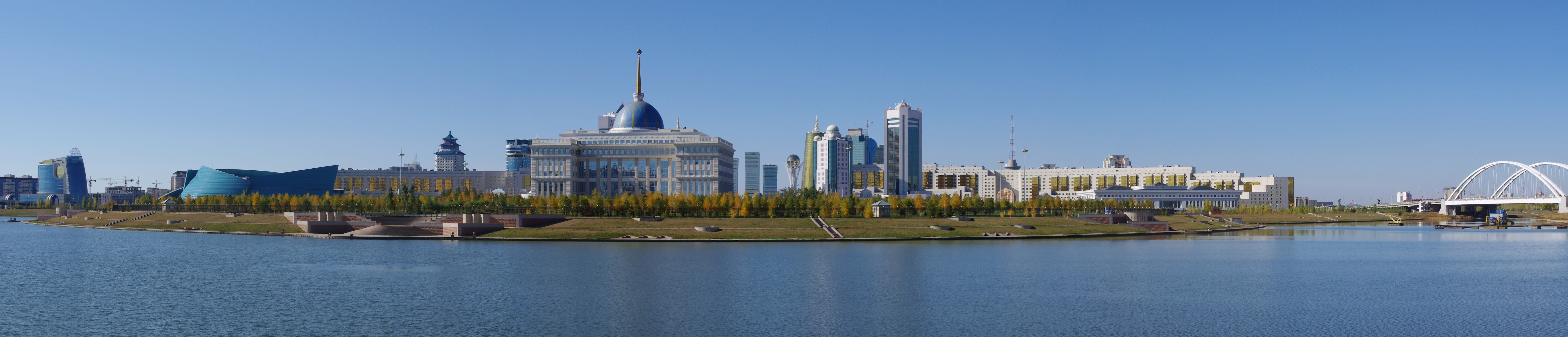
It remains to give form to this desire. In 1998, an international competition was launched for the master plan of the new capital. It was won by the Japanese architect Kisho Kurokawa, theorist of “metabolism”: a city conceived as a living organism, capable of growing and renewing itself, in symbiosis with the steppe and with nomadic traditions. His plan traced the monumental axis - Boulevard Nourjol - along which the emblems of the new State would be aligned.
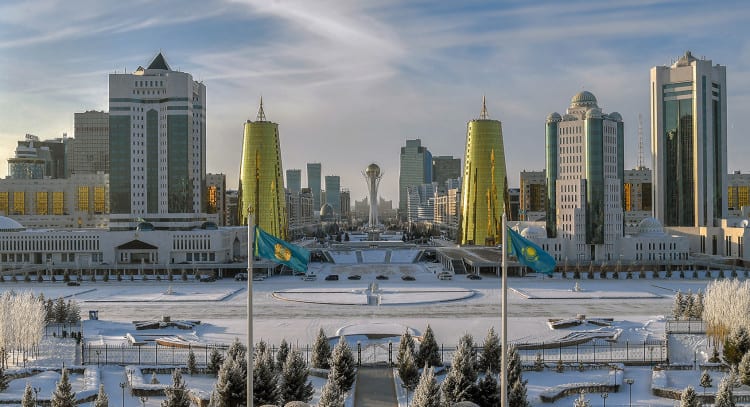
But the town planner was only a piece in a game where the project owner held the pencil. Nazarbayev established himself as unofficial chief architect, retouching the plans, imposing his symbols. The Baïterek, a ninety-seven meter observatory tower - the figure commemorates the year of the transfer, 1997 - materializes a Kazakh legend: the sacred bird Samrouk deposits a golden egg each year in the Tree of Life. At its summit, visitors press their palms into the president’s handprint. To give the city the international luster he coveted, Nazarbayev brought in the greatest: the British Norman Foster designed the Palace of Peace and Reconciliation, a pyramid, then the Khan Shatyr, a gigantic translucent tent of fourteen hectares. Qatar financed a mosque. Astana was compared to Brasília, Canberra, Dubai - all these capitals derived from calculation rather than history.
This is where the deeper motif lies: in a country that had no ancient monuments to show for it, architecture itself became proof of national existence. Building quickly, building big, having world names sign on, meant creating, with glass and steel, the seniority that was missing.
The Akorda, the keystone of the system
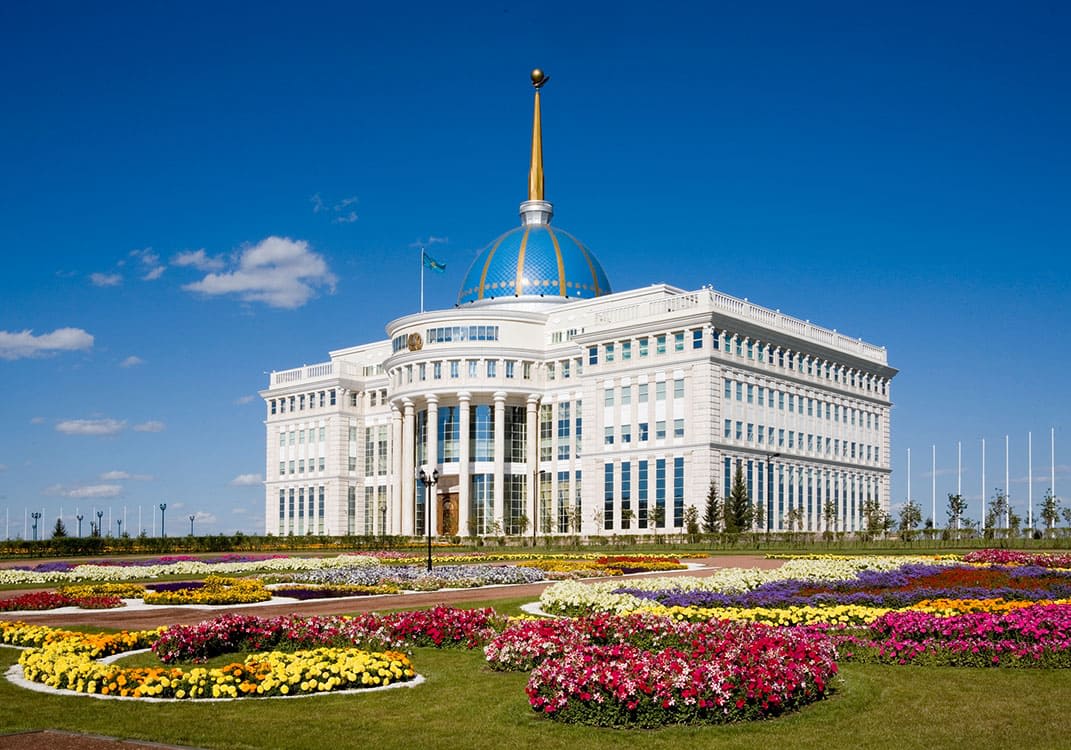
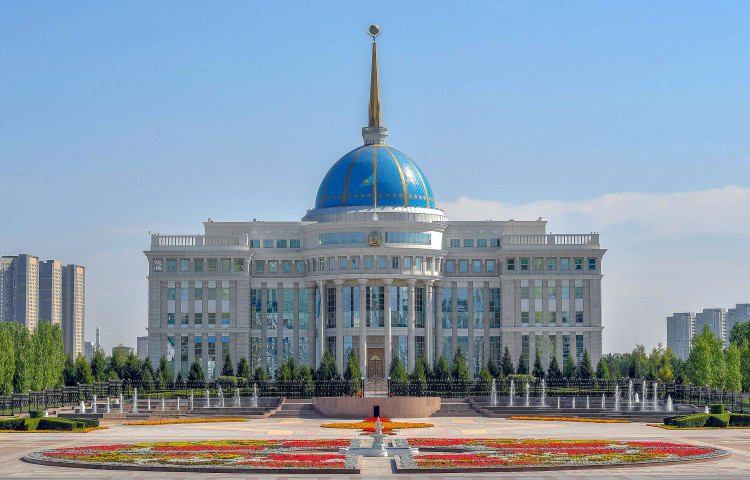
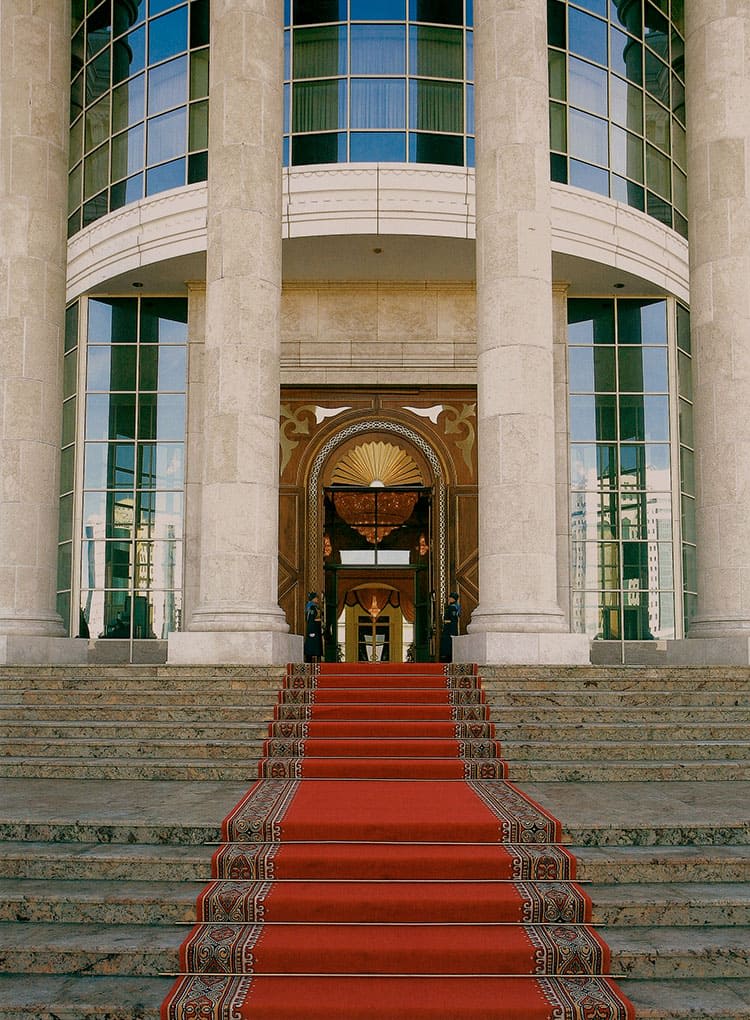
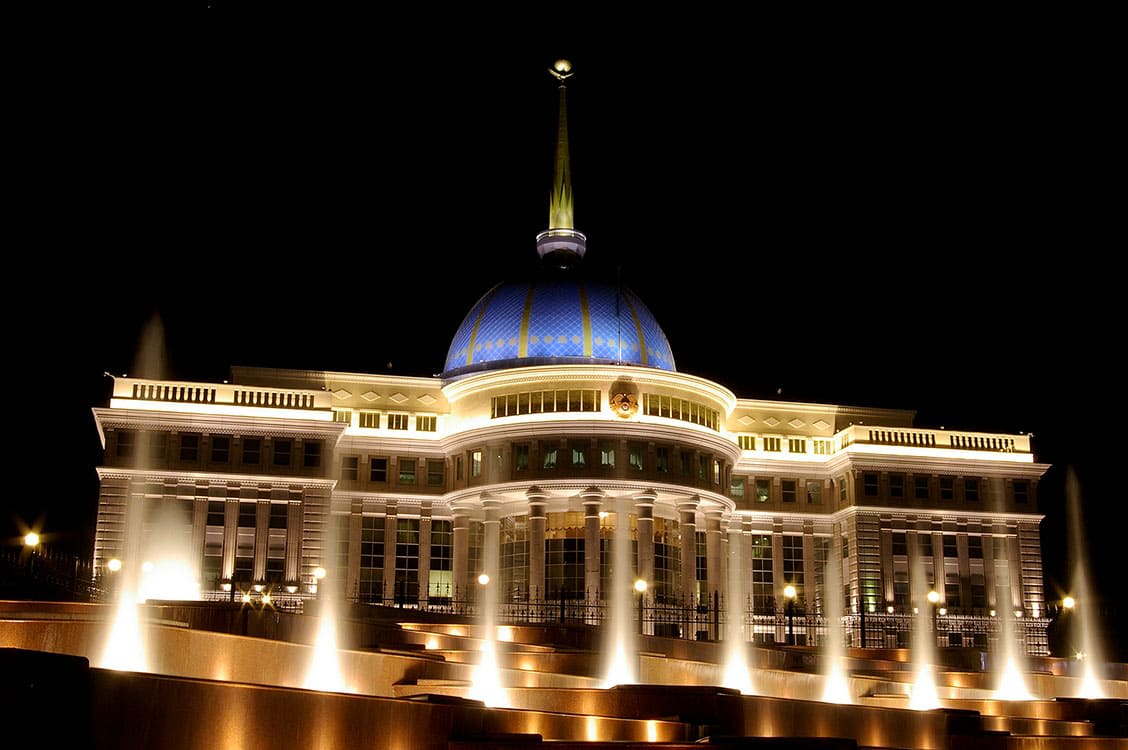
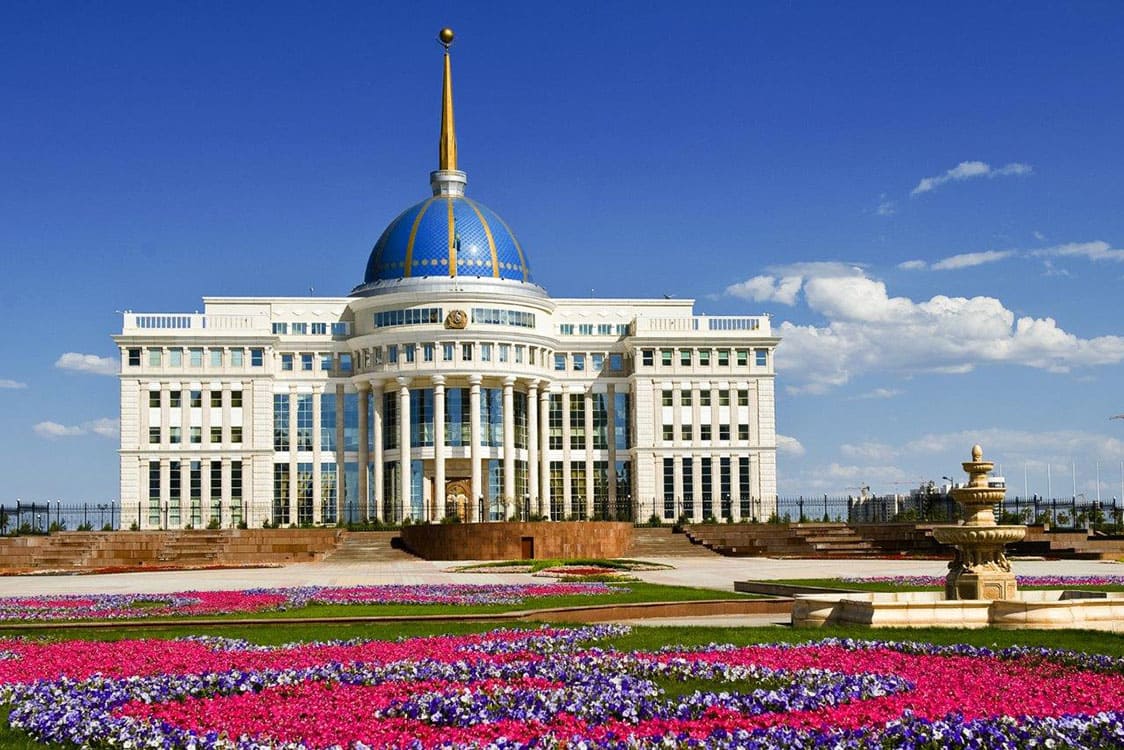
At the end of the axis stands the centerpiece. Inaugurated on December 24, 2004, the Akorda was built by the Mabetex group of Behgjet Pacolli - future president of Kosovo - on an artificial mound on the left bank. Thirty-six thousand seven hundred and twenty square meters, a blue and gold dome culminating at eighty meters with its spire, facades in Sicilian travertine cut in the old style. At the top of the dome, a sun with thirty-two rays topped by a steppe eagle: the exact motif of the national flag. The palace does not just shelter power, it repeats its emblem towards the sky.
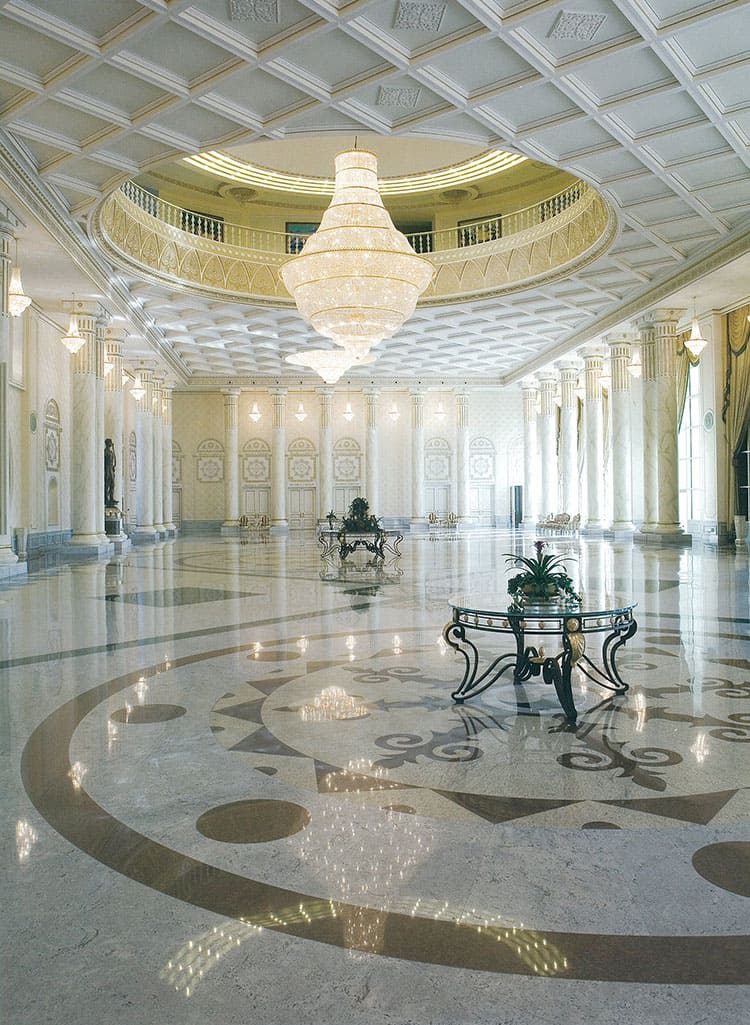
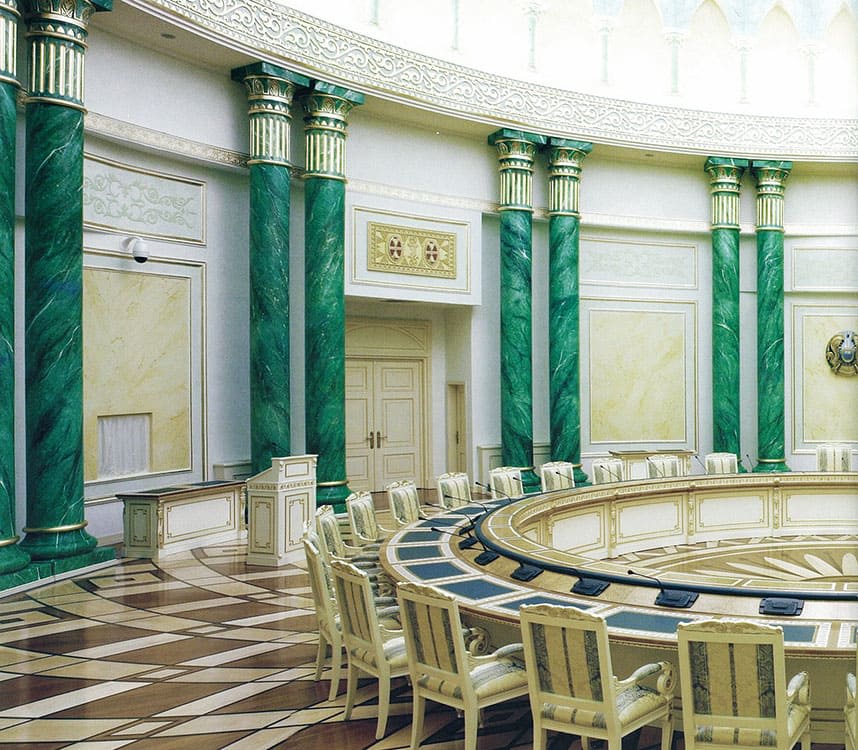
Inside, each room bears its function like a title: the Marble room for signing treaties, the Oval room for summit talks, the Golden room for confidential meetings, up to a yurt-shaped room, a tribute to the nomadic past. The very name of the palace evokes a story: Aq Orda, the “White Horde”, refers to a medieval Turkic state - a way of connecting the new Republic to a lineage prior to Russian domination, beyond the Soviet century.
One detail, however, says everything about the conception of power housed there: the Akorda is not a residence. It is a workplace, the headquarters of the Presidential Administration. The head of state reigns there but does not sleep there. The palace is a stage, not a home - architecture made to be seen and photographed, not to be inhabited. The entire city, moreover, comes from this logic: it was designed to be seen by the world before being experienced by its own people.
The immobile palace of a moving capital
Here is the irony that makes this palace fascinating. The Akorda was built to embody permanence - the eternal stone of a state that was intended to be thousands of years old. But the capital that surrounds him has never stopped moving under him. Astana in 1998, then Nur-Sultan in 2019, when Nazarbayev’s successor renamed the city in honor of the founder; then, again, Astana in 2022, after the worst troubles the country has experienced and the disgrace of the same Nazarbayev. Two name changes in three years. The city also holds a Guinness World Record: that of the capital most often renamed in modern times.
The contrast is striking. Under its immutable dome, the palace has seen its address change twice depending on the political winds. The monument wanted to solidify the identity of a nation; above all, it will have revealed its fluidity. Making a symbol of permanence is one thing; preventing history from contradicting him is another.
The capital of a thousand names
- 1830-1832 Foundation of the Akmola post, soon Akmolinsk.
- 1961 Renamed Tselinograd, “city of virgin lands”, under the Soviet campaign to cultivate the steppe.
- 1992 Became Akmola again after independence.
- 1997 Becomes the capital of Kazakhstan.
- 1998 Renamed Astana, “the capital”.
- 2019 Renamed Nur-Sultan, in homage to Nazarbayev.
- 2022 Becomes Astana again. Guinness World Record for the most renamed capital in modern times.
The Akorda in brief
- Inauguration.
December 24, 2004, on the left bank of the Ishim, in Astana.
- Builder.
Mabetex Group, of Behgjet Pacolli, future president of Kosovo. * Dimensions.
36,720 m²; blue and gold dome at 80 m with the spire; Sicilian travertine facades. * Emblem.
Sun with 32 rays and steppe eagle at the top of the dome, taken from the national flag. * Function.
Workplace of the president and seat of the Presidential Administration - not the residence of the head of state. * Name.
Aq Orda, “White Horde”, echoing a medieval Turkic state.
Conclusion
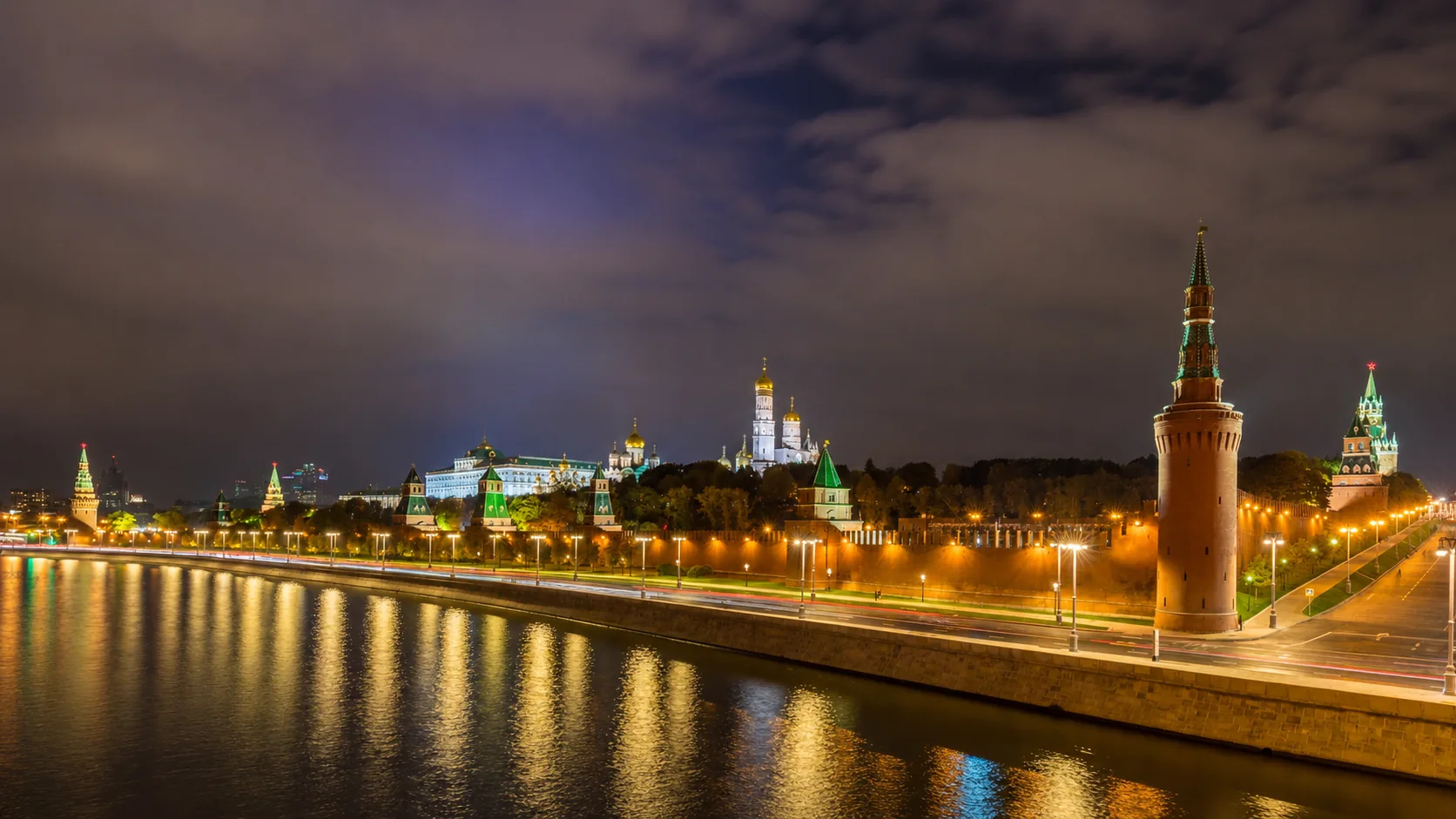
The Akorda will remain as the palace of a paradox: that of a country which had to construct its past before being able to invoke it. Where Versailles, the Kremlin or Buckingham condense centuries of accumulated stone, the Kazakh palace was delivered turnkey, in three years, on a plain where nothing grew. It doesn’t tell a story; it takes its place. And if its dome seems so sure of itself, it is perhaps because it alone compensates for everything that the steppe around it had not yet had time to become. The old nations set up their palaces at the end of their history. Kazakhstan started with its own, like planting a flag - hoping that the country would come next.