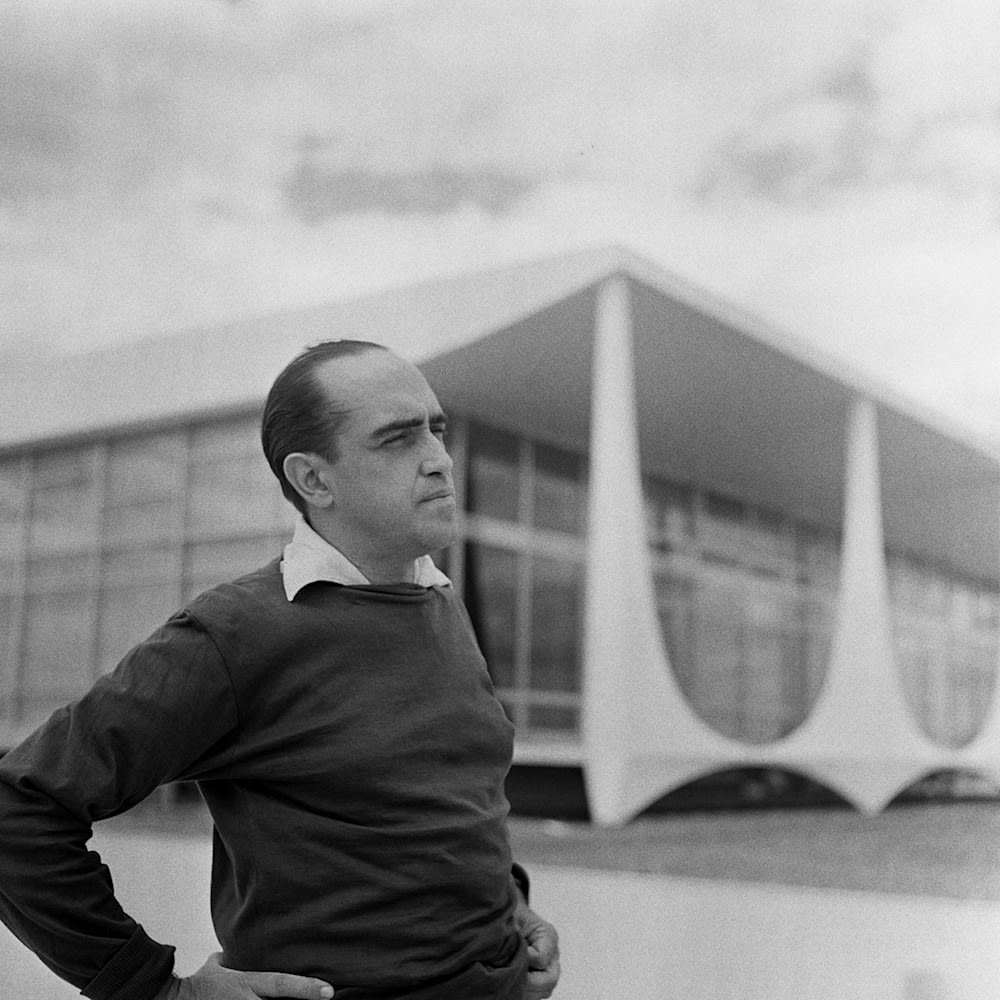
The Palácio da Alvorada is usually presented as the official residence of the President of Brazil, one of the icons of the Brazilian architect Oscar Niemeyer, a manifesto of modernism set on the edge of a lake. All this is true, but forgets the essential. This palace was not built in Brasília: Brasília was built around it. When its marble columns rose in 1957, there was still no city, no avenues, no ministries - nothing but a savannah plateau and an artificial lake. The residence of the head of state was not the crowning achievement of an already standing capital: it was its first stone, laid before the city even had a plan.
Return to the pioneer palace that defined a capital emerging from the void.
The story begins with a political bet. In 1956, President Juscelino Kubitschek engaged Brazil in a dizzying adventure: transferring the capital from Rio de Janeiro to the interior of the country, on a desert plateau in the Center-West, and building it there from scratch in a few years. The project is huge, the schedule crazy. And in this titanic project, a building had to come out of the ground before all the others - not a ministry, not a parliament, but the president’s house.
Before the palace, a plank hut
Even before the first stone of Alvorada was laid, power had to be housed on a site where nothing existed. This was the role of the Catetinho, a temporary wooden residence, hastily assembled to accommodate Kubitschek during his visits to the future site of Brasília. A modest, almost rustic construction, planted in the middle of the cerrado: the first anchor point of the State on still virgin land.
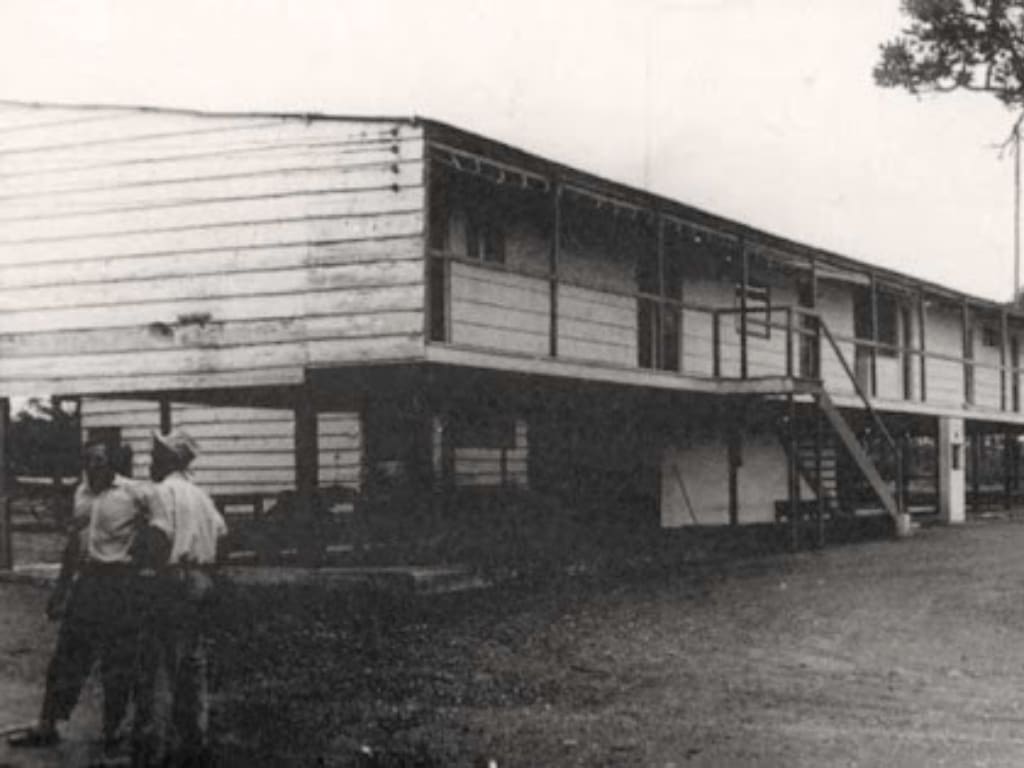
This detail says everything about the pioneering condition of Brasília. The government first set up shop in a wooden hut, at the end of a dirt track, to monitor the birth of its own capital. The Catetinho was not a palace; it was an advanced post. But he announced the logic of the whole project: here, the State would arrive before the city, and would camp on the site until the capital existed around it.
The house before the city
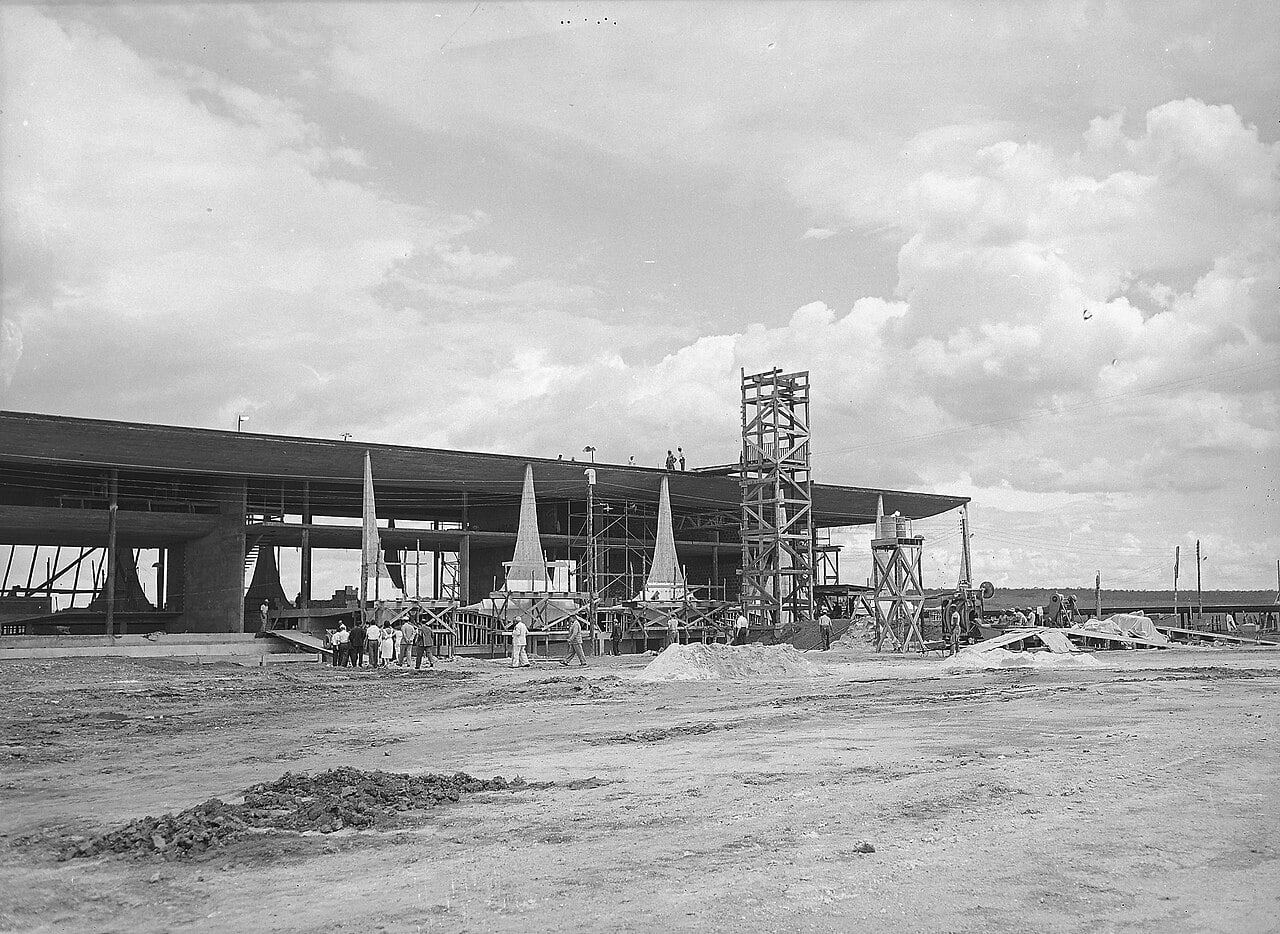
Then comes the Alvorada, and this is where the singularity of the palace lies. Its construction began in 1957 and it was inaugurated on June 30, 1958 - almost two years before the official inauguration of Brasília, on April 21, 1960. It was the first permanent building in the new capital, the first to rise from the ground and the first to be delivered.
But it’s not just a question of timing. Kubitschek wanted the residence to be ready even before the town planning competition which was to draw up the city plan was decided. The reason is illuminating: the president intended for this palace to serve as a reference, a template, for everything that would follow. By first building the house, he established the architectural language of the capital to come - its lines, its scale, its ambition. The residence was not intended to fit into an existing city; it is the city that should comply with it. Niemeyer, responsible for designing it, was fully aware of the challenge: it was necessary to succeed from the outset, with a building designed to be remembered, since it would set the tone for everything else.
This is a rare reversal in the history of palaces. Everywhere else, the residence of a head of state is established in an already constituted capital, whether it dominates or crowns. In Brasília, the relationship is reversed: the palace precedes the city and programs it. The president’s house was the first word of a sentence that the capital would take two years to complete.

A residence built on water and light
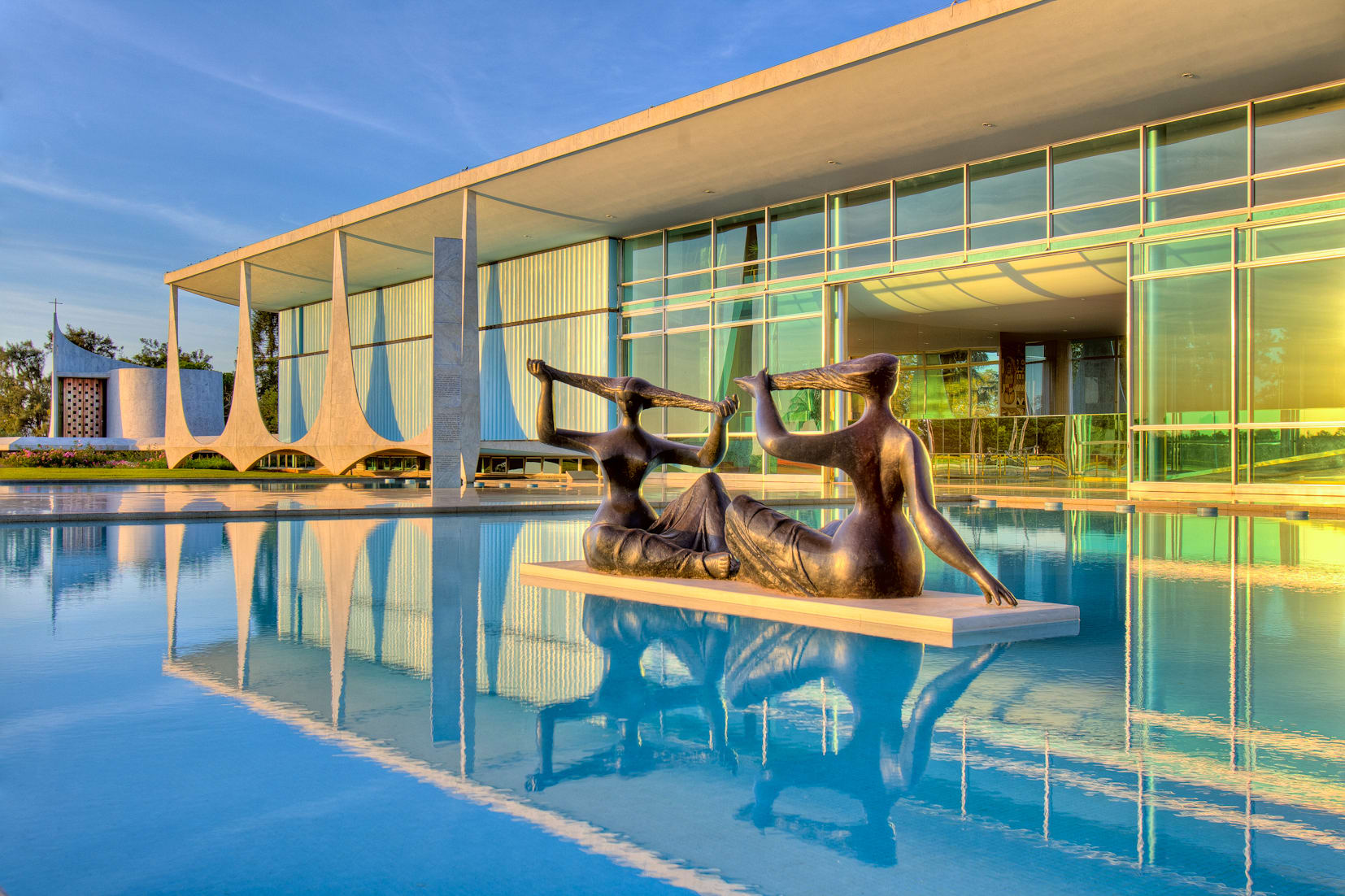
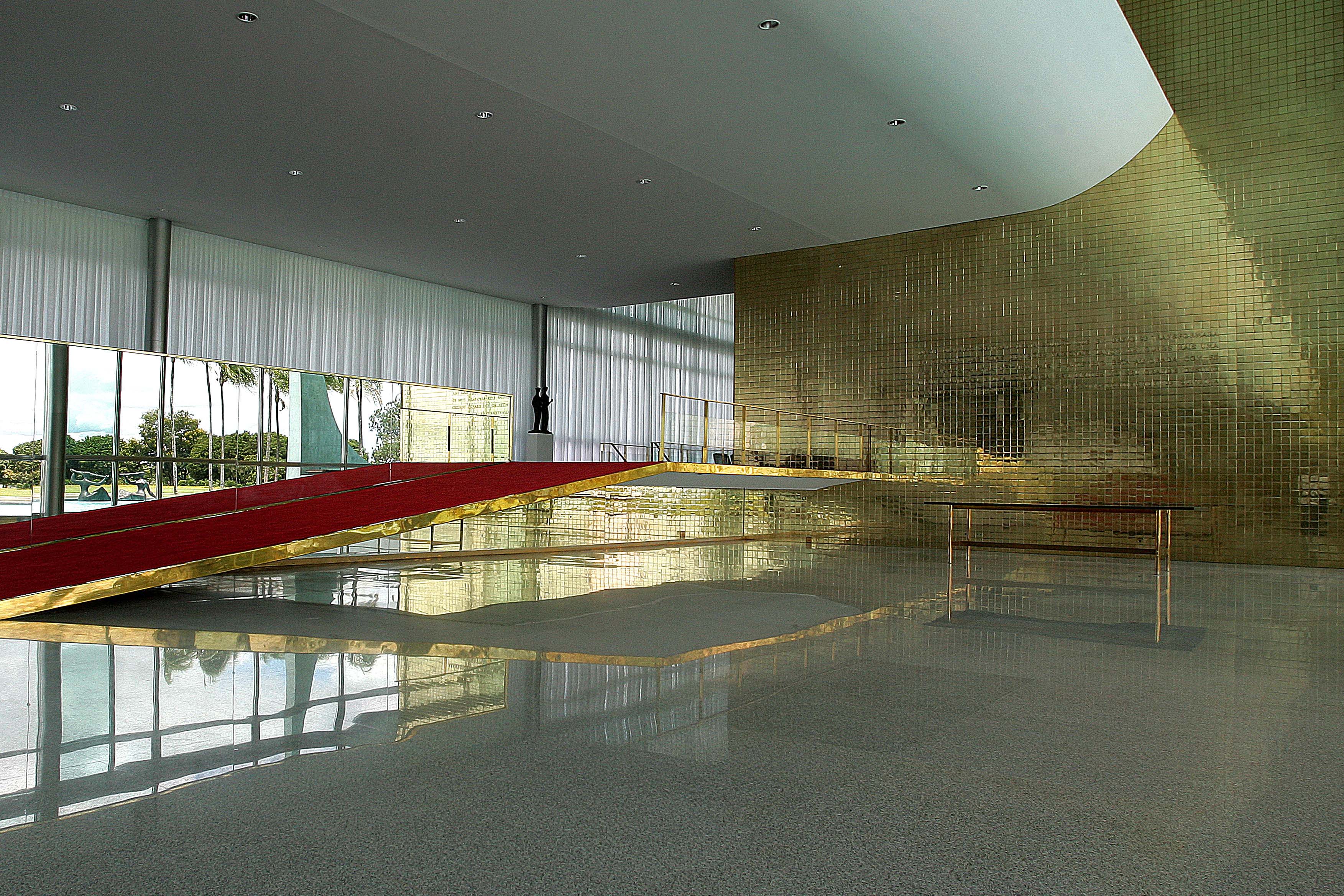
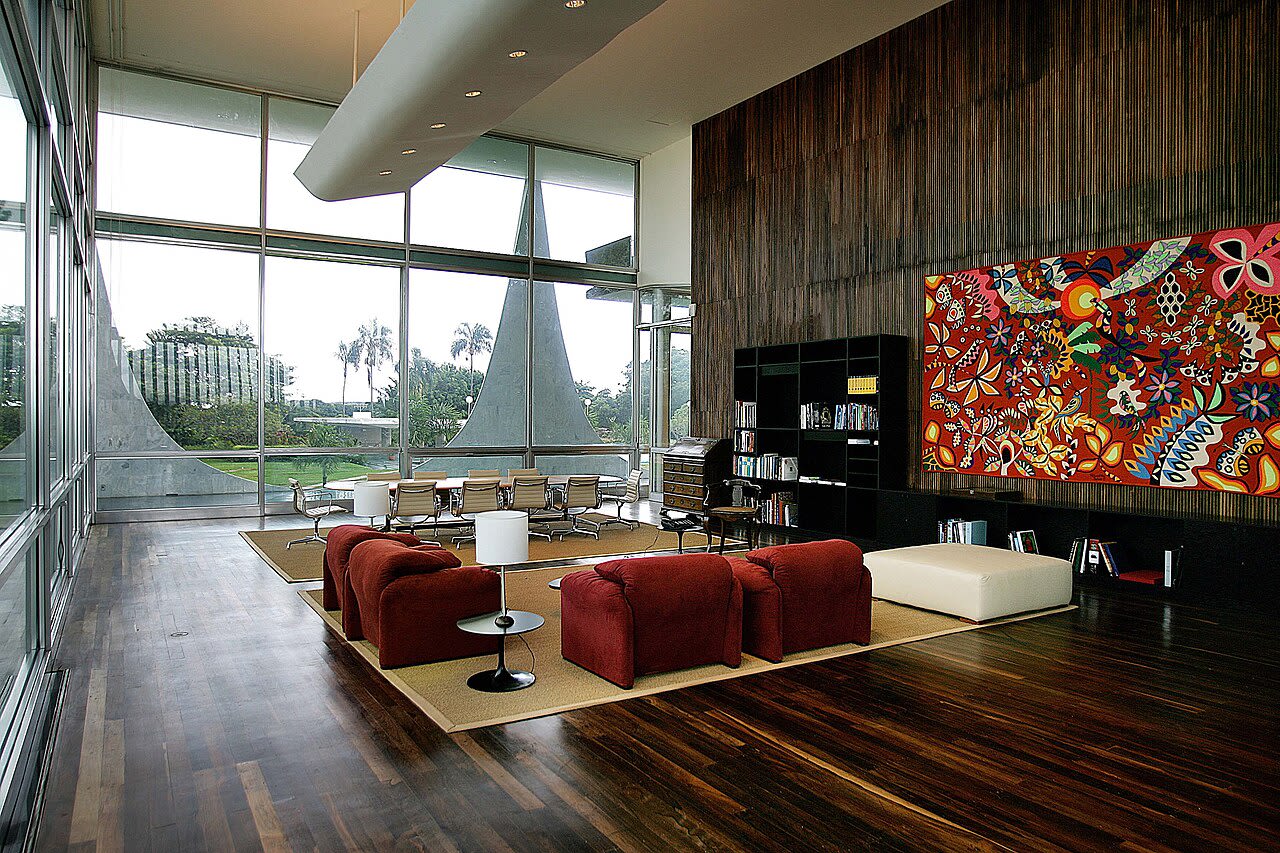
It remains to be understood what this model palace imposed. The Alvorada is a low, horizontal building, lying on a peninsula of Lake Paranoá, covering approximately seven thousand square meters distributed over three levels. Nothing like a fortress: glass planes, clear surfaces, an assumed transparency between the interior and the landscape. The residence of the Brazilian head of state was designed not to be entrenched, but to open onto water and light.
Its decisive element is the columns. These white marble blades, which seem to only touch the ground at one point, run along the facades and give the palace its appearance of suspended lightness. They have earned the building comments that remain famous: the writer André Malraux considered these columns to be the most important architectural element since those of Greece. We read in turn of leaves, stems, ship’s sails; their shape, calculated with engineer Joaquim Cardozo, transforms a simple support into a signature. Proof of their symbolic power: the Alvorada column has become the very emblem of Brasília, used on the flag and the city’s coat of arms. The column of a private residence has become the logo of a capital city - a case where the stewardship of representation extends far beyond the threshold of the palace.
The secret plan of a mansion
Beneath its resolutely modern exterior, Alvorada nevertheless hides an ancient lineage, and Niemeyer has never denied it. He said he was inspired by ancient Brazilian residences, with their long facade, their covered gallery and their adjoining chapel. The composition of the whole confirms this: to the main body are added two annexed volumes - on one side the services pavilion, partly buried, on the other the chapel - exactly according to the plan of the large rural houses of the country.
The paradox is instructive. The most futuristic palace in the Americas, the one that was to embody the “new beginning” of Brazil, is based on the most traditional domestic plan possible: a long reception house flanked by its gallery and its place of worship. Niemeyer did not break with heritage; he rewrote it in concrete, glass and marble. Under the modernity of the form, the organization of hospitality remains that, proven, of the Brazilian residence: receive under a long facade, circulate through the gallery, pray next to it. The break is in the vocabulary; the grammar of reception comes from afar.
Sleep here, govern elsewhere
Finally, we must note what the chronology reveals about Brazil’s priorities. The first permanent building in the capital was neither the seat of government nor the parliament, but the residence. The president’s workplace, the Palácio do Planalto, would not be inaugurated until 1960, along with the city. In the meantime, the executive will camp in the provisional.
This sequence founded a lasting organization of the Brazilian presidency: the head of state resides in Alvorada and governs in Planalto, a few kilometers away. The protocol function and private life on one side, institutional work on the other - two palaces for two uses, connected by a daily route. Where other states house everything under one roof, Brazil has separated the home from the office from the start. And it is significant that, in this distribution, it was the house that got the ball rolling: in Brasília, before knowing where we would govern, we first decided where the president would sleep.
Conclusion
The history of palaces is almost always that of a power which settles in a city made for it. That of Alvorada is the opposite: a house erected in the void, before the streets, before the ministries, before the inhabitants, and which served as a model for everything that was to be born around it. It is customary to say that a palace crowns a capital; in Brasília, the palace founded it. The name of the building - Alvorada, the dawn - also said the program: the break of day comes before the city that it illuminates. In Brazil, the dawn of power was a residence, and everything else rose after it.
FAQs
What is the Palácio da Alvorada? It is the official residence of the President of the Republic of Brazil, located in Brasília, on a peninsula of Lake Paranoá. Work of Oscar Niemeyer, it is the residence of all Brazilian presidents since Juscelino Kubitschek.
Why do we say that it was built before the capital? Because it was the first permanent building in Brasília: its construction began in 1957 and it was inaugurated on June 30, 1958, almost two years before the official inauguration of the city, on April 21, 1960. Kubitschek even wanted it to be ready before the end of the urban planning competition, so that it would serve as a reference for the future capital.
What does the name “Alvorada” mean? “Dawn”, or “break of day”. The name comes from a phrase by Kubitschek describing Brasília as the dawn of a new day for Brazil.
Why are the Alvorada Columns famous? These white marble blades that barely seem to touch the ground have become a symbol of Brasília, featured on the city’s flag and coat of arms. André Malraux considered them the most important architectural element since the Greek columns.
What is the difference between Alvorada and Palácio do Planalto? Alvorada is the residence of the president; The Palácio do Planalto, inaugurated in 1960, is his workplace and the seat of the executive. The Brazilian presidency thus separates private and protocol life from government work.
What was Niemeyer’s inspiration for designing it? Despite his modern language, Niemeyer said he was inspired by ancient Brazilian mansions, with their long facade, covered gallery and adjoining chapel - a traditional reception plan rewritten in concrete, glass and marble.