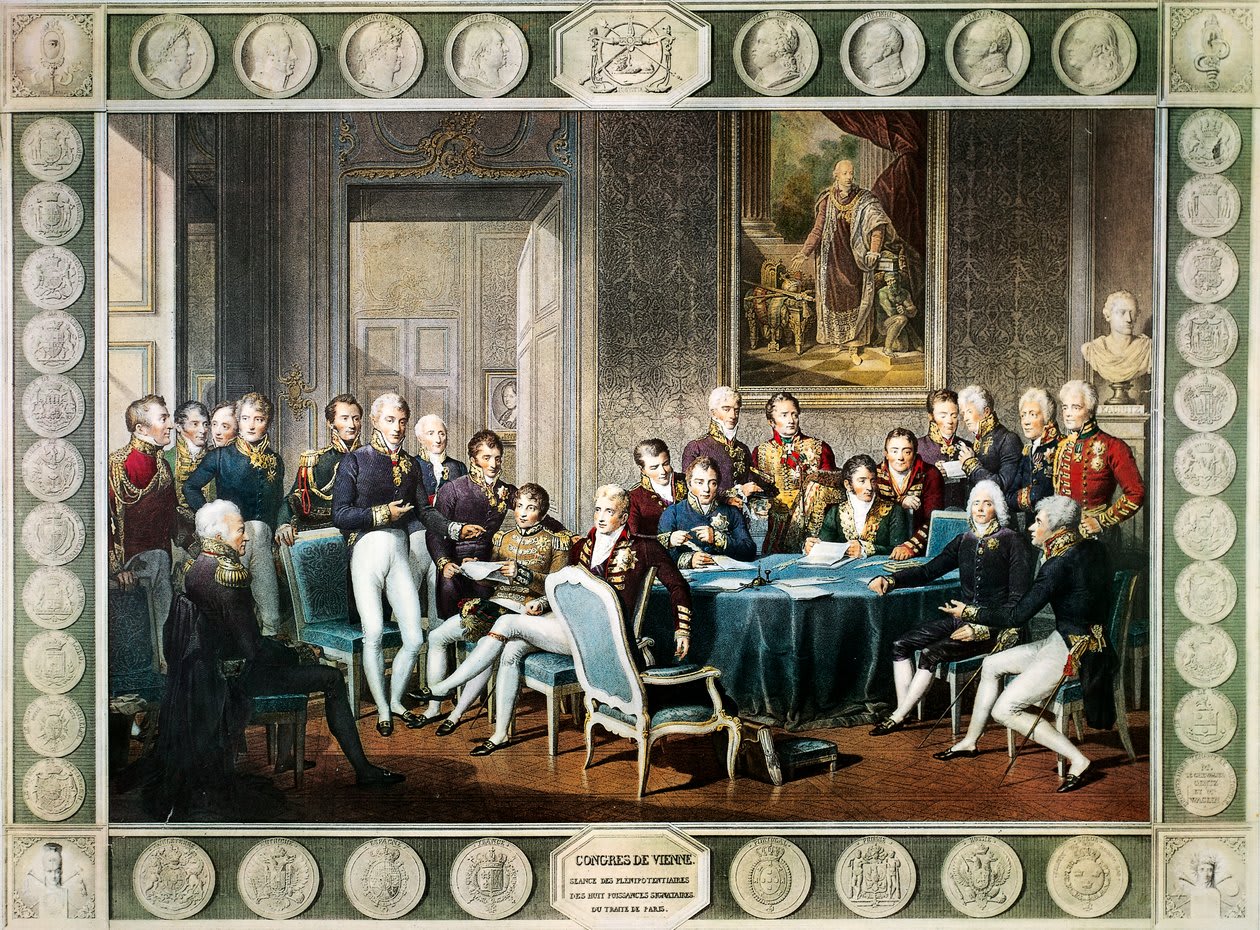
1814. Napoleon’s Empire has just fallen, and the victorious countries are meeting in Vienna to redraw the map of Europe. France arrives as a defendant: without an army, without prestige, threatened with being cut up. To defend it, its negotiator Talleyrand takes neither soldiers nor money - he takes his cook. Two centuries before science made it a discipline, this bet invented gastrodiplomacy: the art of making the table an instrument of power.
Certain sentences alone sum up an entire strategy. In the fall of 1814, before leaving for Vienna, Charles-Maurice de Talleyrand-France’s minister of foreign affairs and principal negotiator-is said to have told Louis XVIII, the king returned to the throne after Napoleon’s fall: “Sire, I need pots rather than written instructions. » The sentence makes you smile. Yet it hides one of the most skillful calculations in the history of diplomacy.
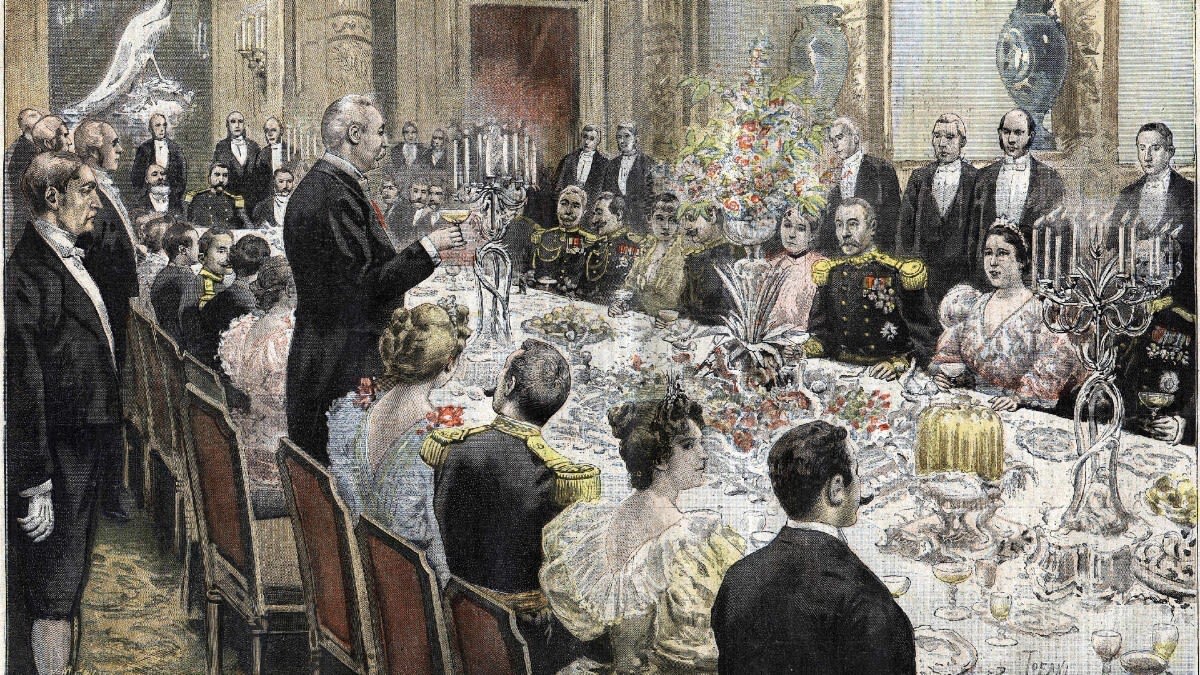
To understand this bet, you have to imagine the situation. The Congress of Vienna, opened on November 1, 1814, was the great peace conference where the victors - Austria of Chancellor Metternich, Russia of Tsar Alexander I, Prussia and the United Kingdom - remade the map of Europe after twenty years of Napoleonic wars. France, for its part, arrives as the accused. Its emperor has fallen and exiled. His armies are defeated. The victors want to punish it, reduce it, perhaps cut it up. Talleyrand has neither army nor territory to offer. He had only one resource left, which no one at the time saw as a political tool: the French art of the table.
Marie-Antoine Carême, a weapon in the luggage
This weapon has a name: Marie-Antoine Carême. He is considered the father of French haute cuisine, and he is already nicknamed “the king of chefs and the chef of kings”. At thirty years old, he is the most famous chef in Europe. He worked for Napoleon; he will work for the Tsar of Russia, for the future king of England, for the British ambassador. His clientele alone brings together all the great powers present in Vienna. Talleyrand takes it with him like one takes a weapon.
On site, Carême offers a luxury that Europe has not seen since the time of Napoleon. The dinners at the French embassy become the event of the Congress: the meeting place that must be attended, the table that is talked about the next day in all the delegations. It is said that he created nearly two hundred different soups over the months. The figure is unverifiable, but it clearly states its intention: to make each meal a demonstration. It was also in Vienna that he perfected “French service”, the art of presenting a large number of carefully arranged dishes on the table at the same time. Its cuisine would become, until the end of the 19th century, the model for all European courts.
What was at stake between cheese and dessert
This luxury was not just decoration. Behind the table, Talleyrand pursued very specific goals. The first is simple: a guest received with such generosity feels indebted. He contracts a sort of moral debt, difficult to forget during negotiations. The second goal is to get people talking. “Between two discussions about cheese or dessert, tongues were loosened,” summarizes historian Jean Vitalaux, of the Institut de France. Relaxed by wine and good food, the guests tell the table what they would hide elsewhere.
The third goal is symbolic, and perhaps the most important. In a country defeated by arms, the quality of cuisine becomes another form of power: France has lost its battles, but it remains the country that shows Europe how to dine. The fourth goal, finally, is intelligence: the embassy table was one of the best places to listen and gather information. These four effects - creating debt, getting people talking, impressing, getting informed - are not simple tricks. These are, almost word for word, the mechanisms that the science of negotiation will confirm through experiments two centuries later: sharing a meal creates obligations, calms tensions, facilitates discussion and makes compromises simpler.
When defeat opens the way back
The result exceeds expectations. At the end of the Congress, in June 1815, France obtained much better than it had hoped: it kept broad borders (those of 1792, before the conquests of the Revolution), it regained its place among the nations, and it avoided being carved up. The country that we wanted to punish emerged from the conference as a recognized partner.
We have to be honest: it’s not all about the meals served. The French minister Talleyrand was also a master in the art of dividing his adversaries and playing on alliances, and a fine connoisseur of international law. The table did not win Vienna alone. But it created the framework in which good negotiation became possible. Without the Lenten dinners, Talleyrand’s maneuvers would not have had a stage.
The founding model
This is why Vienna is not a simple anecdote: it is the birth certificate of a practice that is studied today throughout the world, under the name of gastrodiplomacy. The Congress invents a model - cooking as a weapon of influence for a country that is rebuilding itself - which the following two centuries will repeat, and not only in France. The banquet where American President Nixon reconnected with China in 1972, the lunch between Donald Trump and Kim Jong-un in Singapore in 2018, the “100% Irish” menu served to Queen Elizabeth II in Dublin to turn the page on centuries of conflict: all, in their own way, descend from the table in Vienna.
This is the lesson of the Vienna Congress, and it applies everywhere in the world.
Gastrodiplomacy is not a simple ornament of diplomacy: it is sometimes its heart.