When Marco Polo discovered Chinese porcelain at the Yuan court in the 13th century, Europe still knew almost nothing about this white, fine and translucent material. Fascinated, he compared it to the “porcellana” shells, unknowingly giving its name to one of the most coveted objects in history.
For centuries, porcelain remained a mystery from the Orient to Europeans.
From the 16th century, maritime routes upset this balance. The Portuguese opened trade with Asia, soon followed by the Dutch VOC, founded in 1602. This company became the first major world trading power and flooded Europe with Chinese and Japanese porcelain. In Amsterdam, auctions of entire shipments are causing a real “white gold” fever.
Failing to master Chinese secrets, the Europeans imitate.
In Florence, the Medici created the first soft porcelain at the end of the 16th century.
In Holland, Delft developed white and blue earthenware inspired by Ming models, giving rise to the European taste for Chinoiserie.
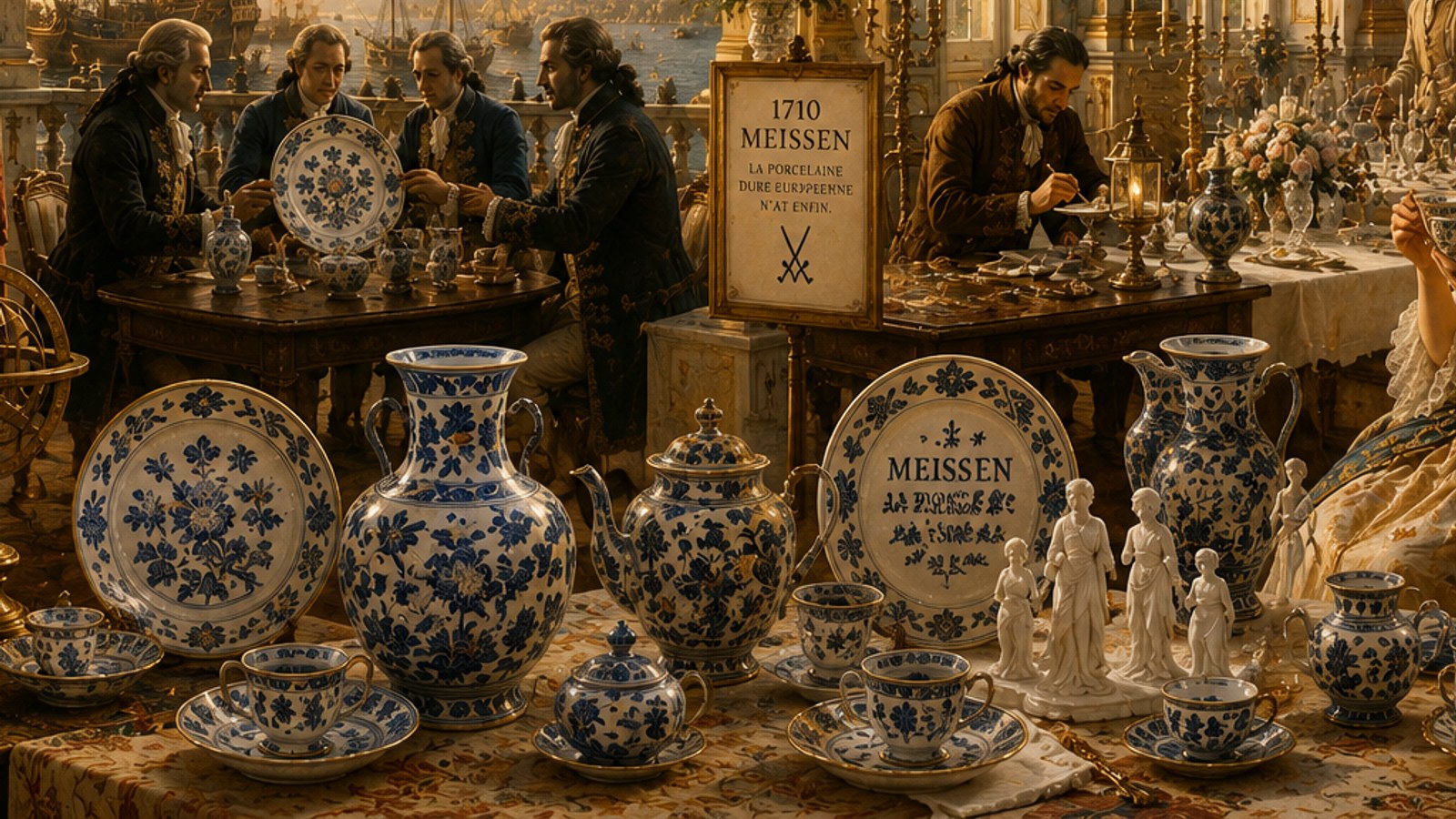
The real turning point came in 1710 in Meissen, Saxony. Johann Friedrich Böttger finally unlocks the secret of European hard porcelain thanks to Saxon kaolin.
For the first time, Europe is competing with China.
Porcelain then became a major diplomatic instrument: monumental services, figurines, royal gifts and princely orders circulated between European courts.
In France, Sèvres embodies the height of monarchical refinement, supported by Louis XV and Madame de Pompadour.
Then the discovery of Limoges kaolin in 1768 gave France its own production of hard porcelain.
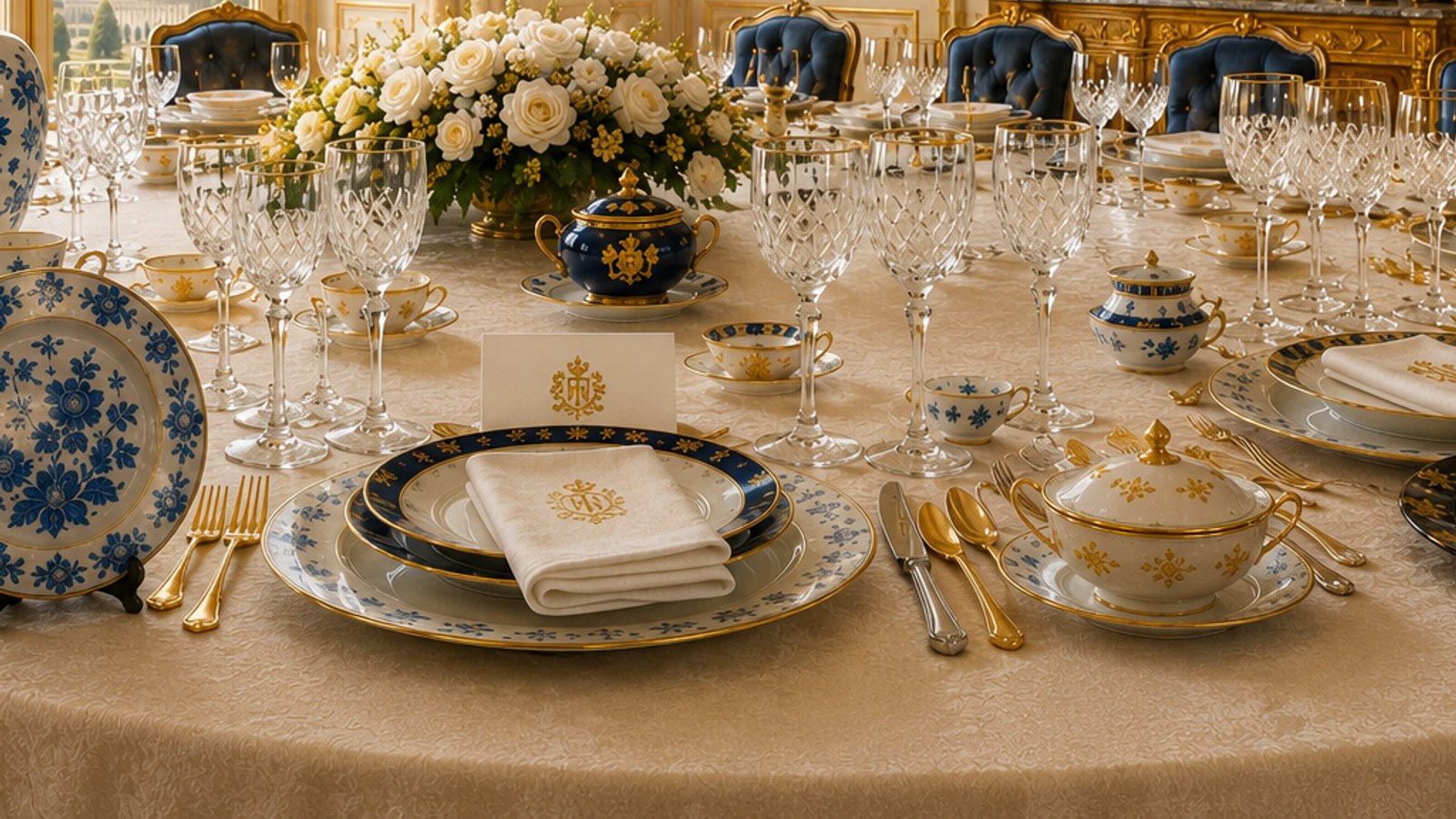
At Versailles, French-style service transformed the table into political theater: abundance, symmetry and etiquette became the visible signs of royal power.