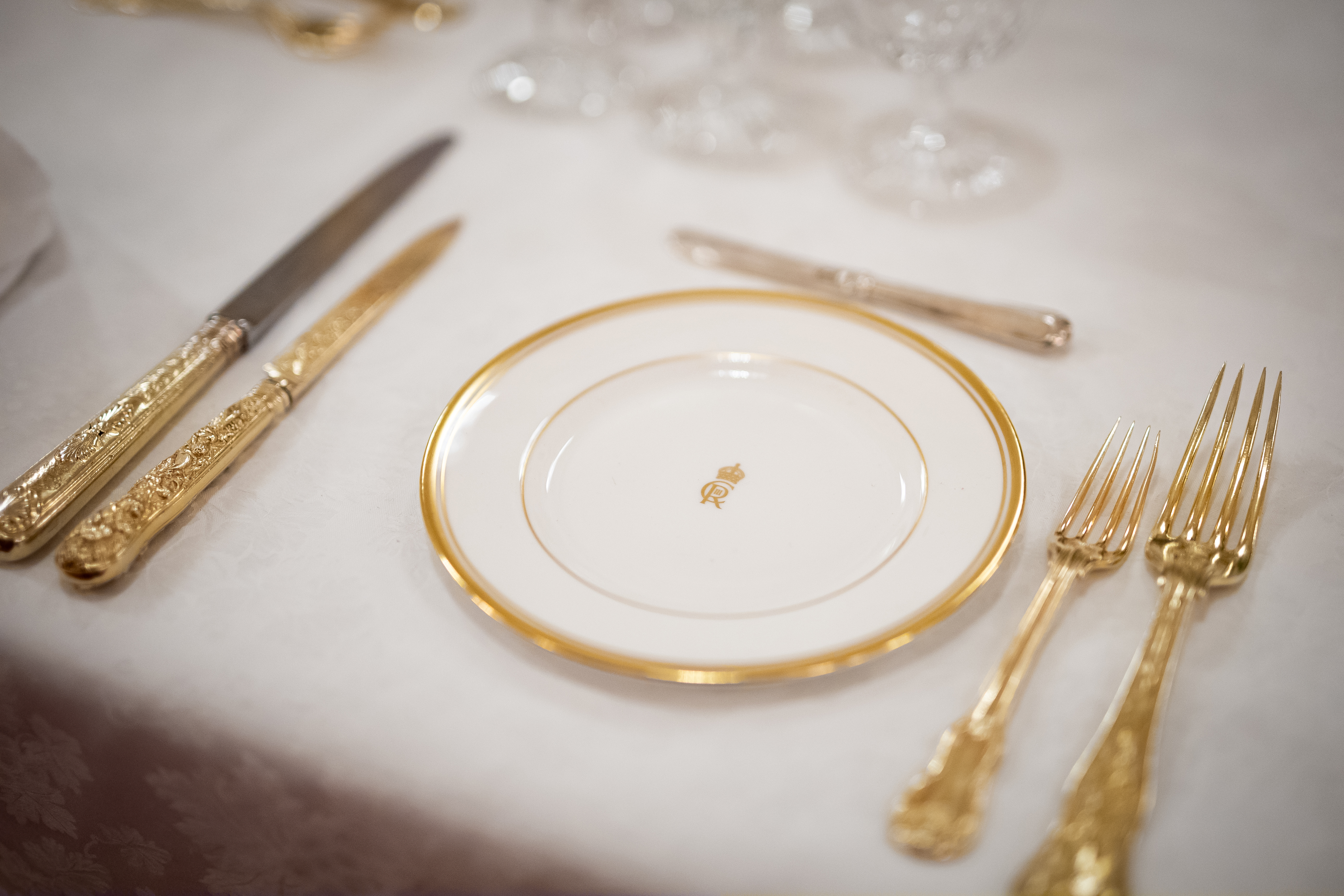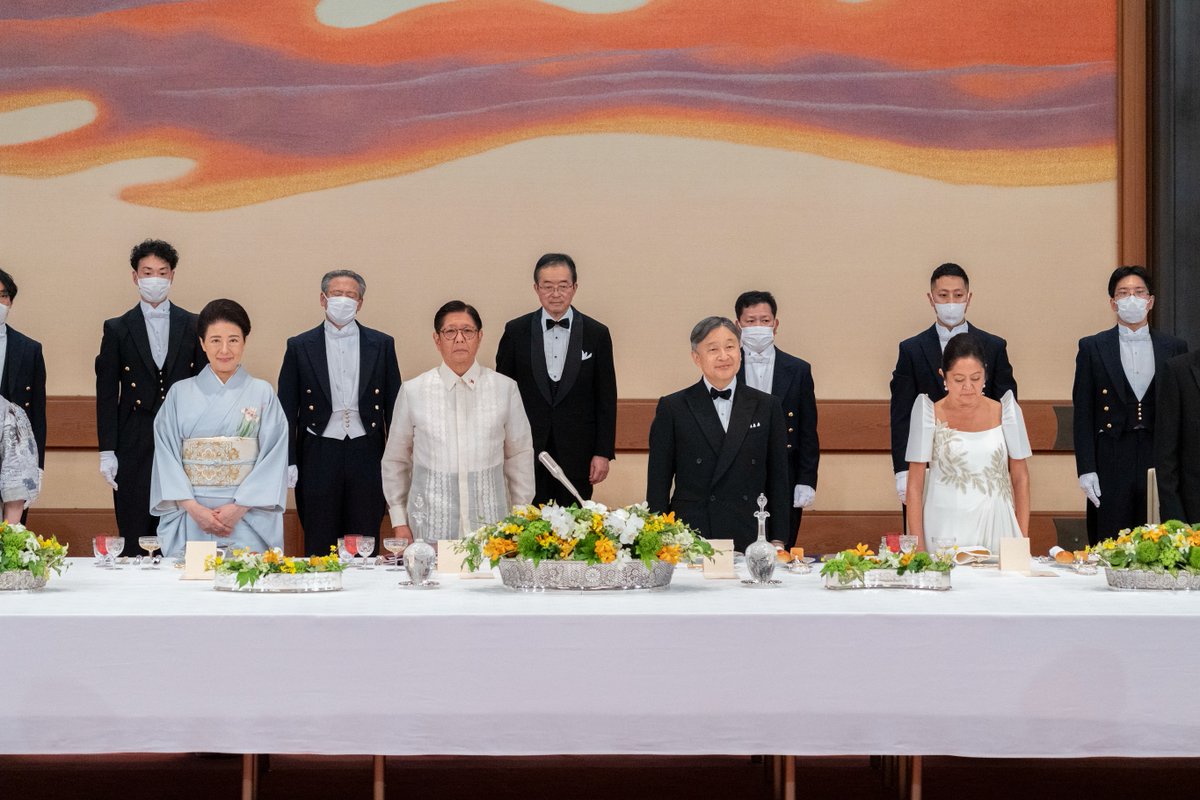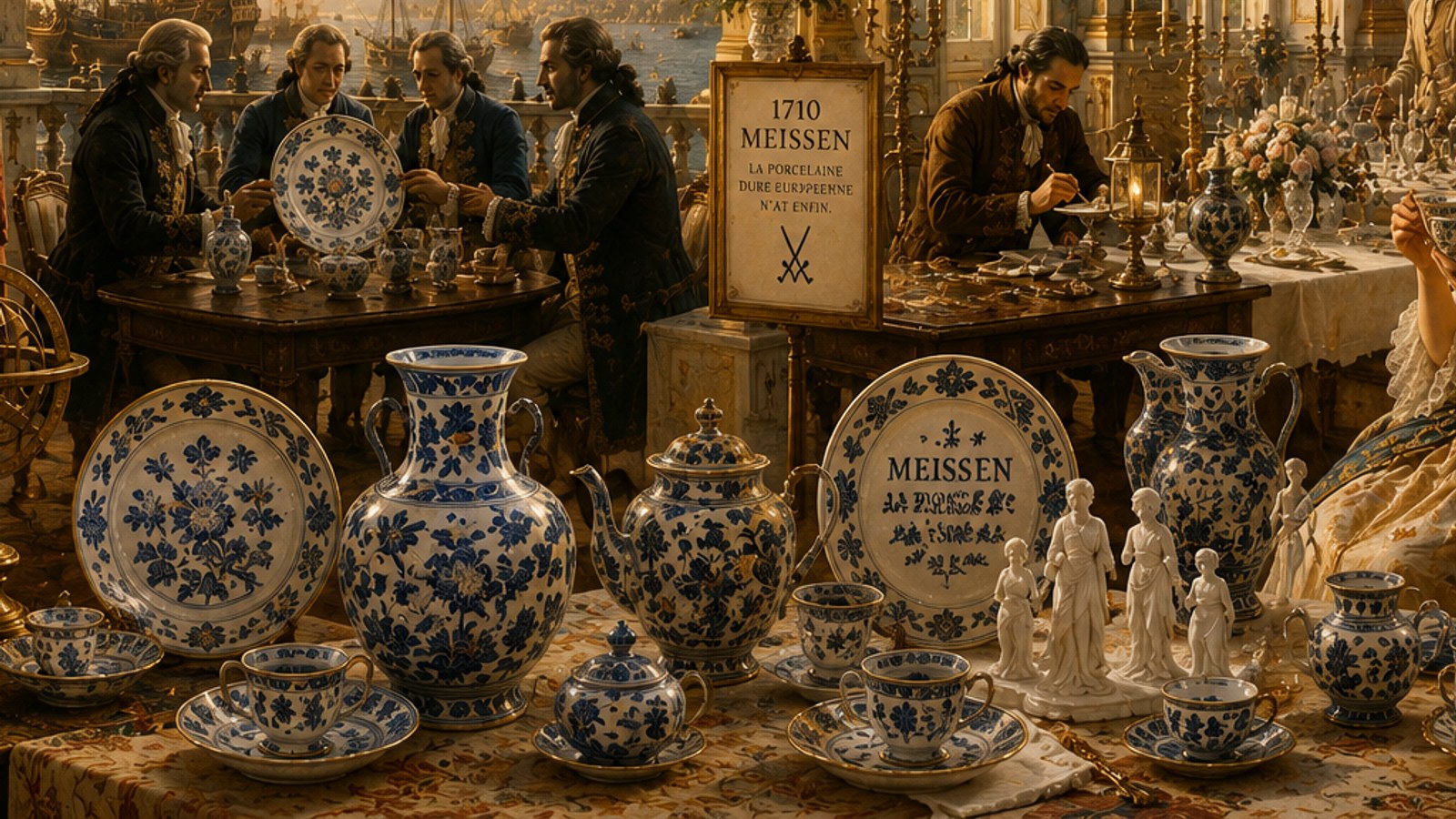
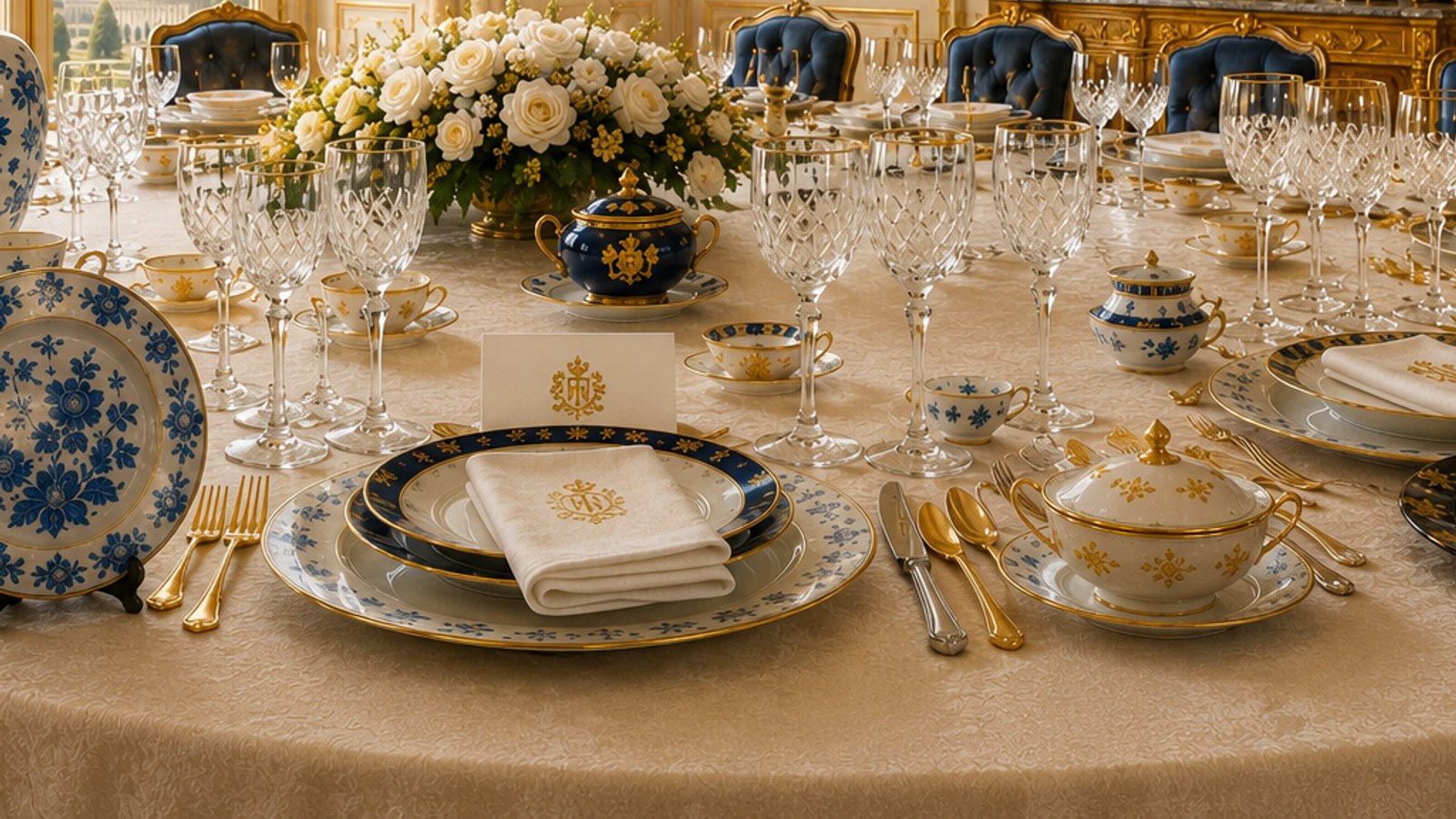
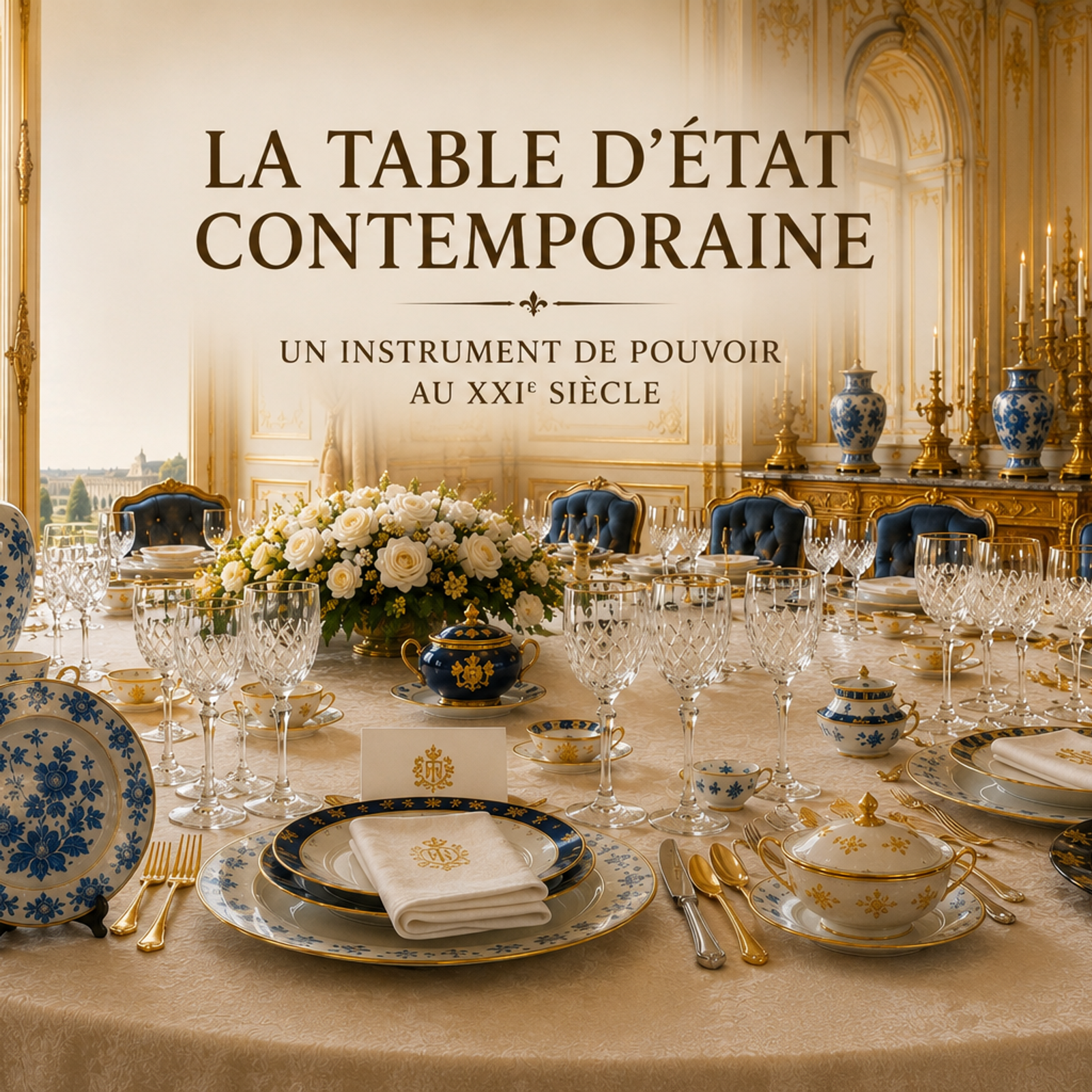
In the 21st century, tableware remains a discreet but essential instrument of global diplomacy.
Behind every state dinner, the table continues to convey a vision of power, refinement and national identity. Porcelain, crystal and protocol are not part of the decor: they fully participate in contemporary political language.
The 20th century profoundly renewed this aesthetic. The German Bauhaus introduced an approach based on functionality and purity of lines, soon extended by Scandinavian design and major European manufacturers.
But the modernity of the table is not only written in the West. In Russia, the Imperial Porcelain Manufactory of Saint Petersburg — founded in 1744 under Empress Elizabeth Petrovna and known during the Soviet era as the Lomonosov Manufactory — retains a central role in the representation of the Russian state. Its official services, combining imperial heritage, cobalt motifs and neoclassical aesthetics, continue to accompany major Kremlin receptions and contemporary diplomatic ceremonies.
In France, the Manufacture nationale de Sèvres remains one of the major symbols of this diplomacy of decorative arts.
The “Bleu Élysée” service, commissioned in 2018, illustrates this desire to combine heritage, contemporary creation and republican representation.
This logic is also very present in China, Japan, the Gulf monarchies and even in the large African presidential residences, where the table is traditionally a tool of prestige and cultural sovereignty.
Today, the stewards collaborate with designers, artisans and manufacturers to create signature tables where contemporary minimalism, Japanese influences of wabi-sabi, the return of artisanal stoneware and the promotion of local know-how coexist.
For a Palace Steward of a Head of State, these choices remain highly strategic. A porcelain from Saint Petersburg, a crystal from Saint-Louis, a Japanese lacquer or a service from Sèvres not only tell an aesthetic story: they project an image of the country, its heritage and its vision of power.
The contemporary state table thus remains one of the last spaces where art, protocol and diplomacy continue to speak with one voice.