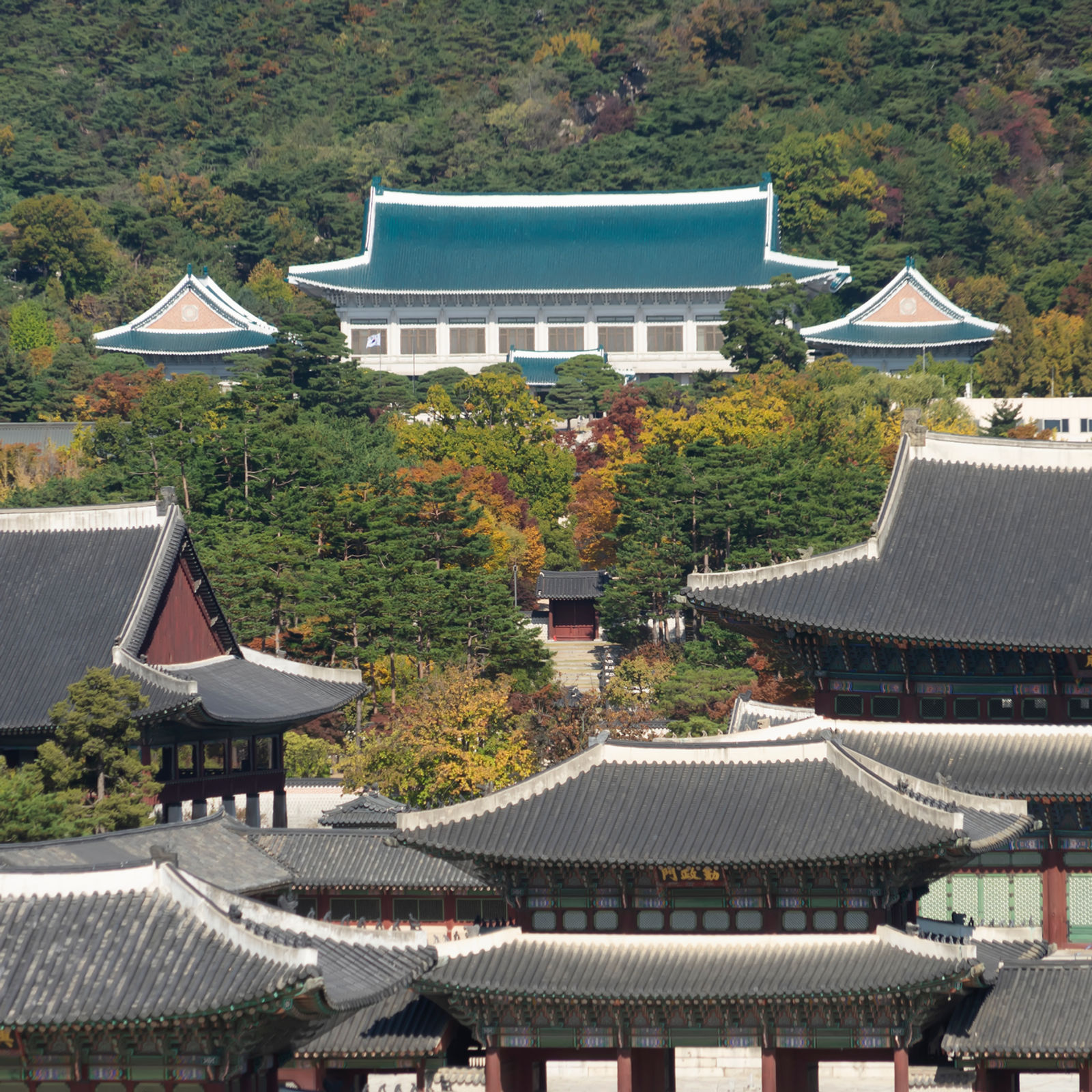
Backed by Bugaksan, behind the royal palace of Gyeongbokgung, Cheong Wa Dae concentrates three layers of Korean power: Joseon monarchy, Japanese occupation and contemporary Republic.
Few presidential palaces carry such historical density in such constrained geography.
iStock/Getty Images Plus
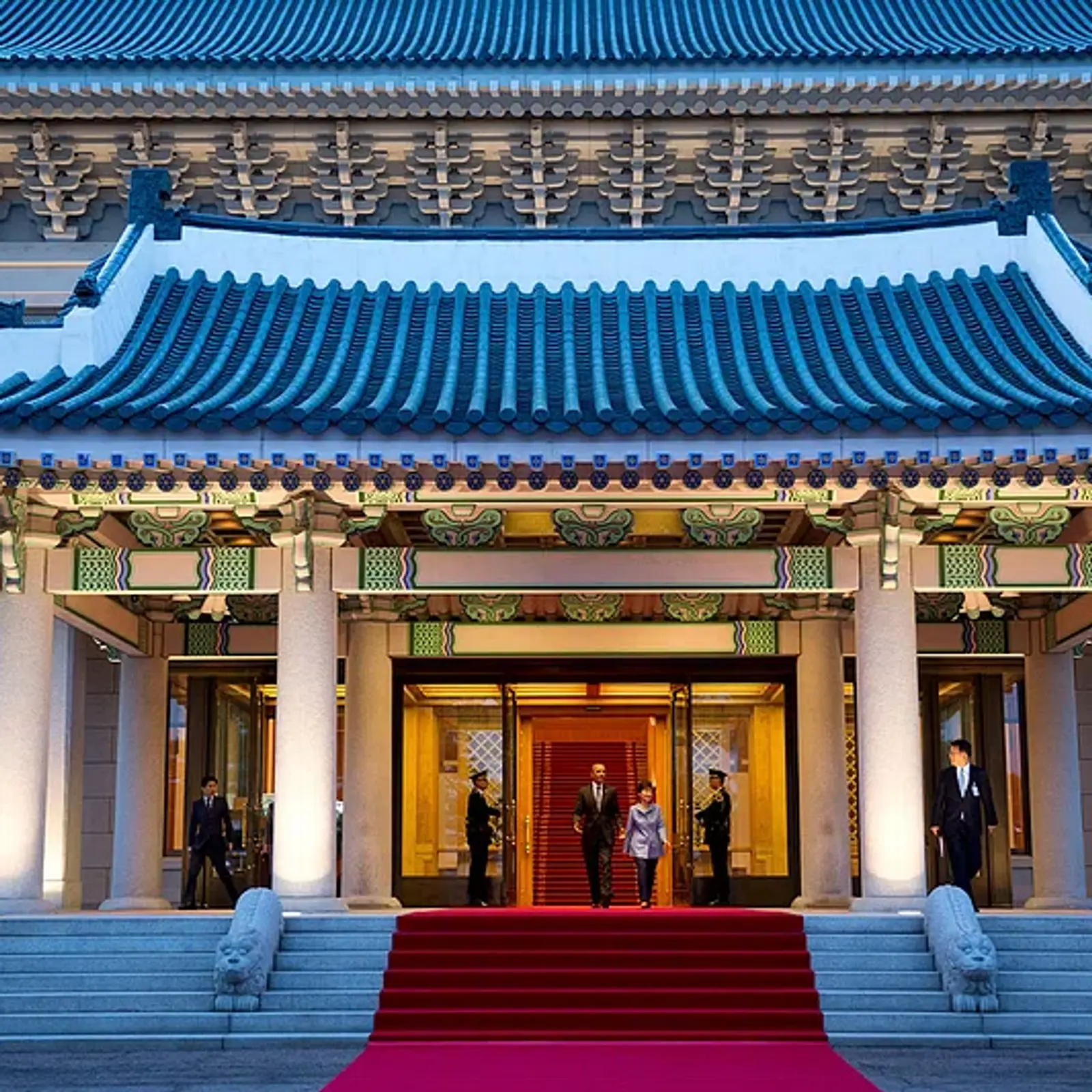
Rebuilt in 1991 in a neo-traditional style, the complex adopts Korean palace codes – curved roofs, blue tiles, controlled horizontality – while remaining a highly secure executive infrastructure. The staging is calculated: the modern president settles in the axis of dynastic power, but behind the royal palace.
The Republic does not completely replace the old order; it is superimposed on it.
Credit: Cheong Wa Dae
Cheong Wa Dae has long functioned as a political fortress. The North Korean proximity, previous infiltration attempts and the mountainous topography impose a culture of control: buffer zones, separate circuits, locked access.
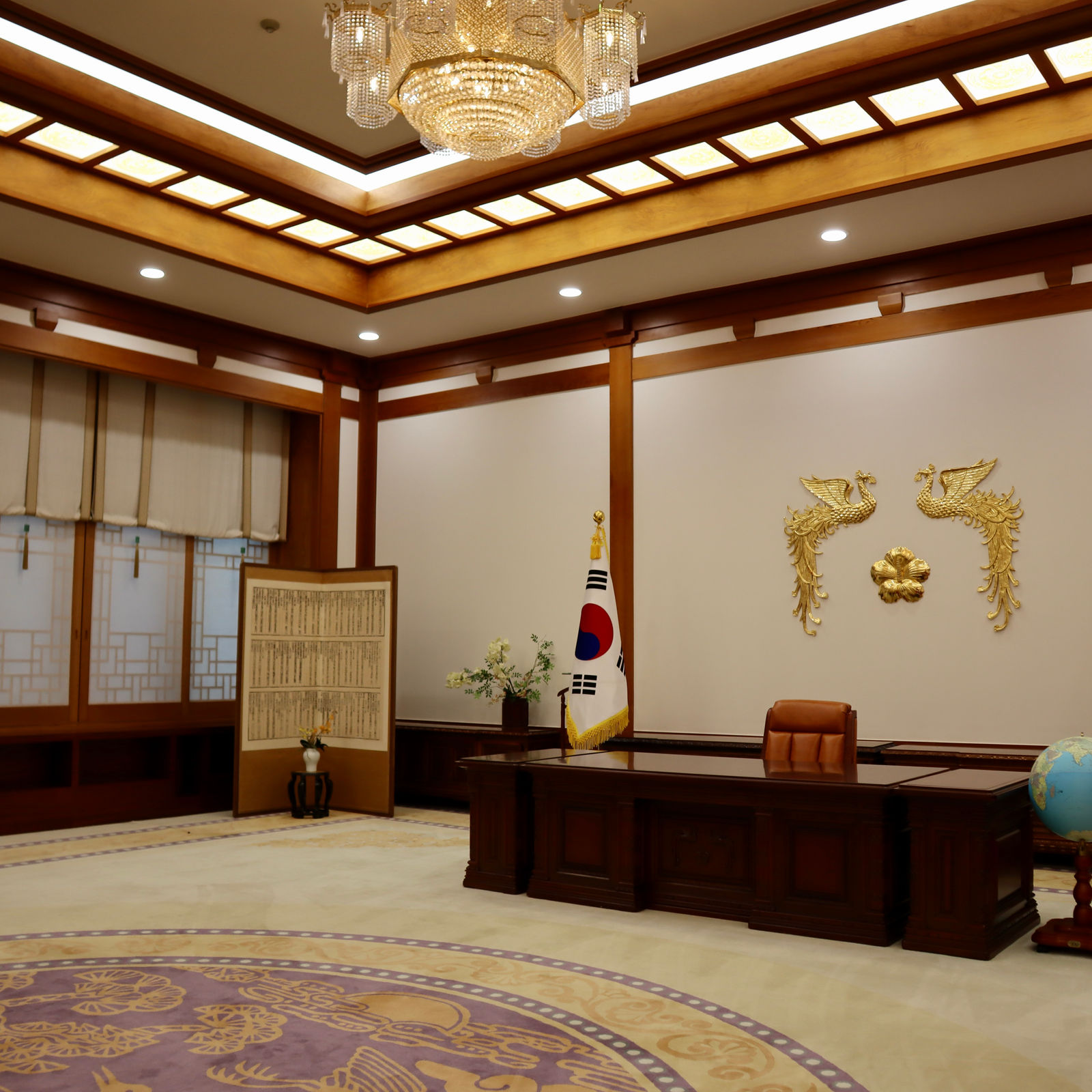
Then comes the break of 2022. President Yoon Suk-yeol transfers the presidency to Yongsan and opens the site to the public. In three years, more than 8.5 million visitors have passed through a previously inaccessible place.
The experience remains brief. In 2025, the presidency returns to Cheong Wa Dae; visits cease for security reasons. This rapid reversibility reveals the profound singularity of the palace: a place designed to protect power, momentarily transformed into a civic space before once again becoming an executive center.
By Studiojbin — Own work, CC BY-SA 4.0,
Cheong Wa Dae is therefore not only a presidential palace. It is a political barometer.
Each opening or closing of the site reflects the way in which South Korea redefines the balance between historical memory, democratic transparency and strategic state culture.